
Electric Car Business Lease Benefits: And Why Salary Sacrifice Goes Further


When it comes to getting an electric car through your business, there has historically only been two options: buy outright or lease. There is now a third (and frankly better) option we'll get to shortly.
But first, leasing. Because if you're going to put employees in electric cars, a business EV lease is a strong place to start. And the benefits are worth understanding properly before you decide anything.
Why businesses are choosing electric cars
The company car has had a quiet renaissance.
For years, the tax implications made it an unattractive benefit. Electric vehicles have changed that calculation entirely.
Low Benefit-in-Kind rates, government-backed incentives, and falling running costs have made a company EV one of the most genuinely valuable things a business can offer.
That's before you factor in the external pressure.
The ZEV mandate is reshaping what manufacturers prioritise and what fleet managers can source. ESG reporting is putting fleet emissions under the microscope. And with over 160 electric models now available, the "limited choice" objection that stalled a lot of businesses a few years ago has largely disappeared.
Most companies are now past the question of whether to go electric. The decision sitting on the table is how.
The benefits of leasing an electric car for your business
The structure of a lease, combined with how HMRC treats electric vehicles, stacks up well in several areas at once.
Low Benefit-in-Kind (BIK) tax
Company car tax is calculated as a percentage of the vehicle's list price, based on its CO2 emissions. For a petrol or diesel car, that percentage sits anywhere between 23% and 37%. For a fully electric car, it's 4% in 2026/27.
On a £40,000 EV, that means an employee's taxable benefit is £1,200 a year. On a comparable petrol car, it could be ten times that.
The rates are confirmed by HMRC through to 2029/30, rising gradually to 9% by the end of the decade. That’s still well below where combustion engine vehicles sit today. For businesses planning multi-year leases, that certainty matters.
For a fuller breakdown of what this means for employees specifically, see our guide to employee tax benefits for EV schemes.
VAT reclaim on lease payments
Where a leased car is used for both business and personal journeys, (which covers most company cars) businesses can reclaim 50% of the VAT on monthly lease payments.
If a maintenance package is included, 100% of the VAT on that element is reclaimable.
Corporation tax relief
Lease payments on electric vehicles are fully deductible against corporation tax.
For petrol and diesel cars, 15% of lease costs are disallowed. On an EV, that restriction doesn't apply. So every pound of the monthly rental can be offset against taxable profits.
No depreciation risk
Because the business is leasing rather than buying, it doesn't carry the asset on its balance sheet and has no exposure to residual value risk. When the lease ends, the car goes back. That predictability makes fleet budgeting considerably cleaner.
Access to newer, better-spec cars
Because the lease term typically runs two to four years, businesses can keep their fleet current without the capital outlay of ownership. Employees get access to the latest models, better range, newer technology, more choice, and the business avoids being stuck with ageing stock it needs to sell.
For senior employees in particular, that matters. A well-specified EV on a business lease is a meaningful benefit in a way that a three-year-old petrol car simply isn't.
Business lease vs salary sacrifice — what's the difference?
Both options put the lease in the company's name. The practical difference between salary sacrifice and a traditional company car is in how the cost is funded and where the tax advantage sits.
With a business lease, the company pays for the car directly and provides it to the employee as a Benefit-in-Kind.
The employee pays company car tax on top of their usual income tax. It’s currently at 3% of the car's list price for an EV, which is low, but the cost of the lease itself still sits with the business.
With salary sacrifice, the employee funds the lease by giving up a portion of their gross salary. Before tax and National Insurance are applied.
Because that deduction happens before tax, the employee pays less income tax and NI overall, which is where the saving comes from. The business isn't out of pocket, and the employee gets the car at a significantly lower net cost than any other route.
The car also is more than just a tool they use for work. It’s a vehicle they can do road trips in, the school drop-off, or just joyrides around the countryside.
The two approaches share a lot:
- low BIK rates
- no depreciation risk
- everything included
But salary sacrifice shifts value toward the employee in a way a standard business lease doesn't.
To understand how salary sacrifice actually works in practice, including payroll deductions, BIK, and end-of-lease options, we've covered it in full separately. Or if you want to get a sense of the numbers first, you can see current salary sacrifice prices across our full car range.
Why salary sacrifice goes further for most businesses
A business lease is a good option. Salary sacrifice is a better one for most companies — and the reason comes down to where the value lands.
Zero cost to the business
loveelectric’s service fee is structured to be offset by the employer National Insurance savings generated by the salary sacrifice deduction. In practical terms, the scheme costs the business nothing to run.
That position has actually improved since April 2025, when the employer NIC rate increased from 13.8% to 15%. Higher NIC means larger savings. The cost-neutral position is more robust now than it was a year ago.
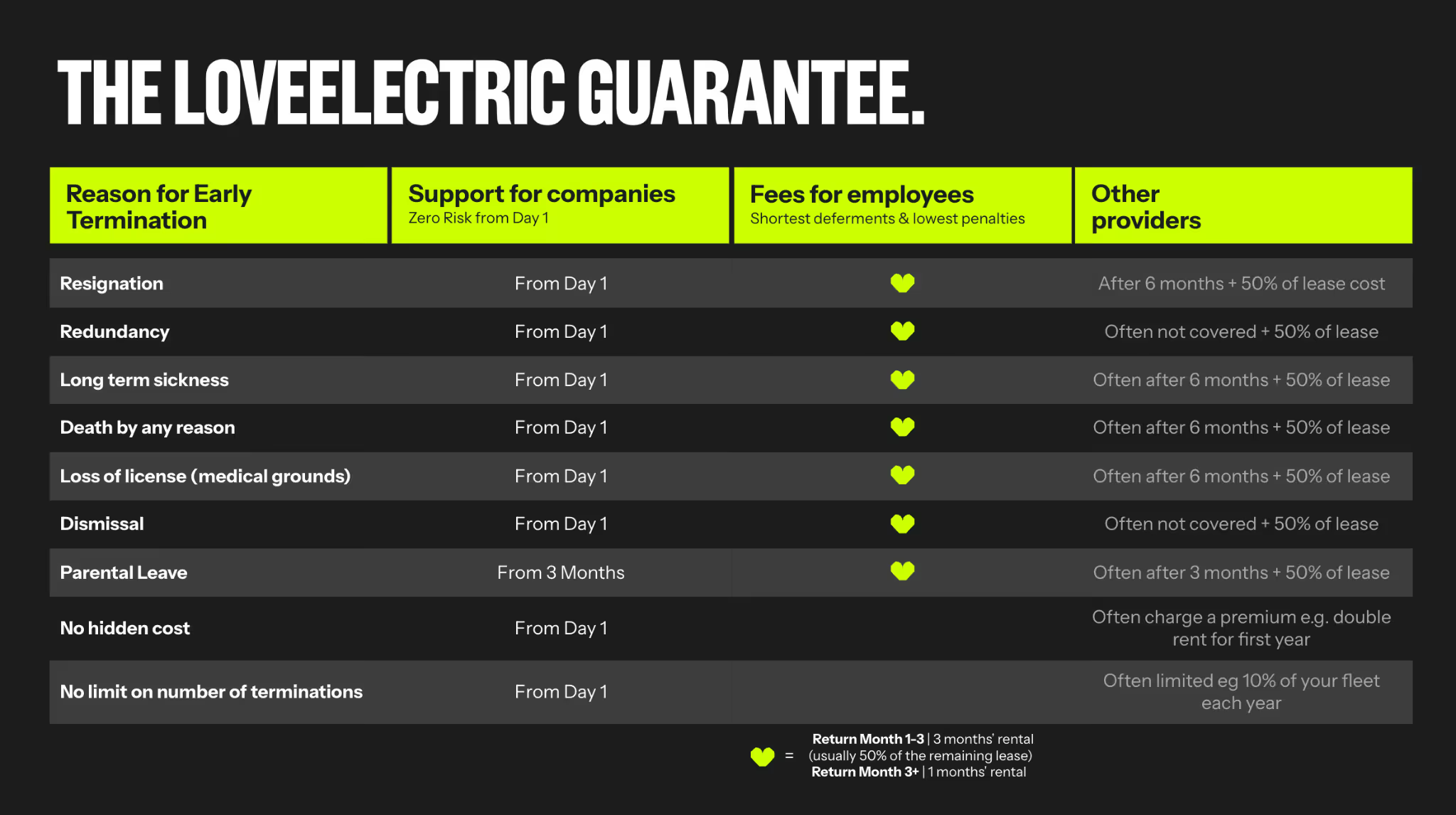
If an employee leaves mid-lease, the Zero Risk Guarantee ensures the business is never left covering unexpected costs.
Employees save 30–60% on the vehicle
Because the lease cost is deducted from gross salary, the employee saves on both income tax and National Insurance. The higher the tax band, the bigger the savings.
For a typical example, say a gross sacrifice of £475 per month, the net impact on take-home pay is around £282. That's a 41% saving on the same car compared to leasing it personally.
For employees earning between £100,000 and £125,140, the benefits go further still. Salary sacrifice reduces adjusted income, which can restore the personal allowance that tapers away in that band. It’s a legal and encouraged way to avoid the 60% tax trap.
To see what the numbers look like for your salary, run your own figures on our calculator.
Recruitment, retention, and very little admin
The financial case is strong enough on its own, but salary sacrifice also adds something a business lease doesn't: a benefit the whole workforce can access, not just the people senior enough to have a company car.
That breadth matters for recruitment and retention. An employee on a mid-range salary who can get into a new EV for £250 a month net is getting something they couldn't access any other way. That's a tangible reason to stay.
On the admin side, loveelectric keeps it light:
- Setup takes around seven days
- Ongoing management runs through a single Company Portal where they can approve orders, downloading payroll reports, tracking leases
- Most businesses spend around 15 minutes a month on loveelectric salary sacrifice admin
For employees who can see the value here and want to bring the scheme to their business, you can refer your company directly.
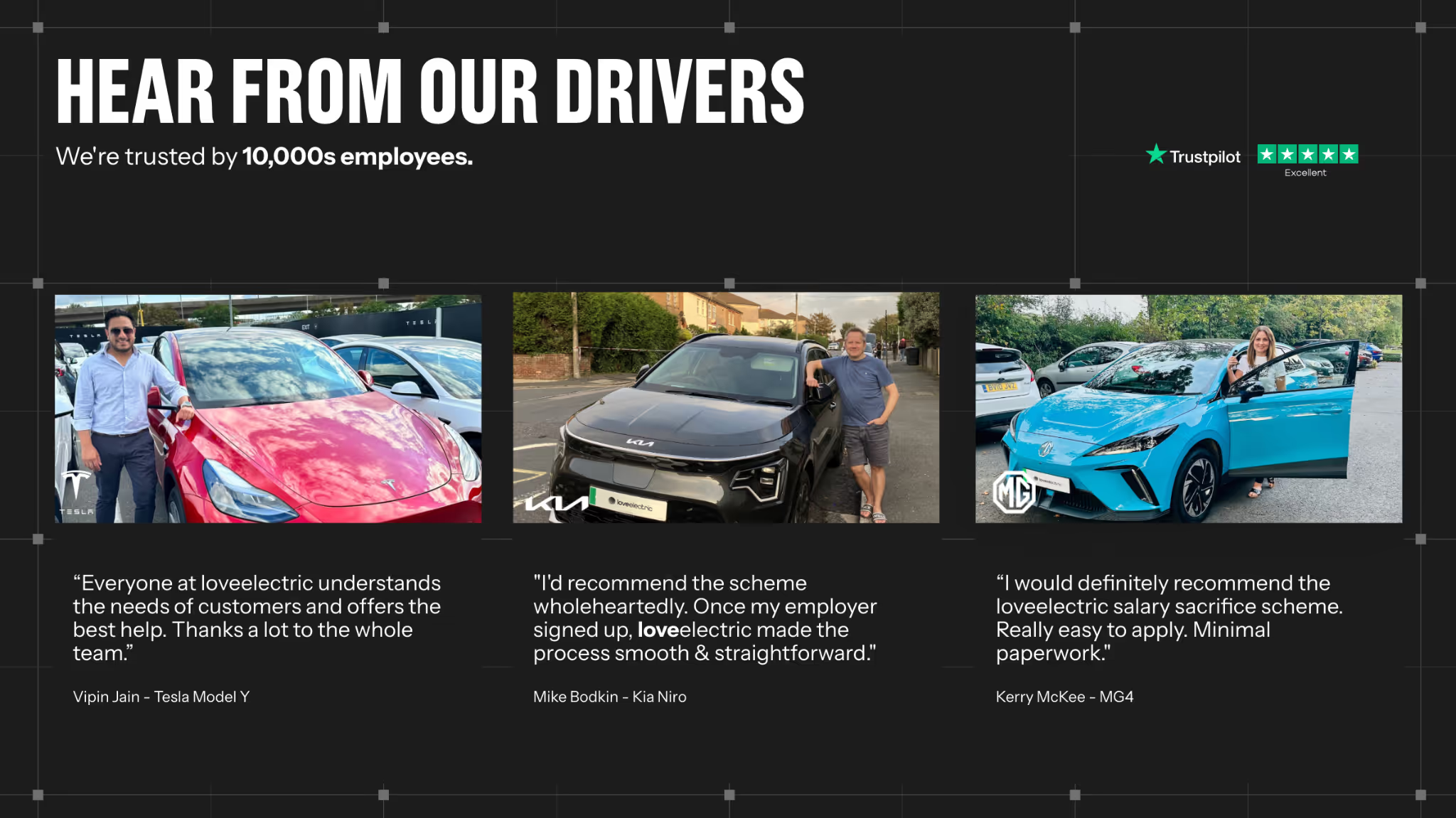
If you want to compare providers before making a decision, we've put together an honest breakdown of the best salary sacrifice car scheme providers.
And if you're still weighing up the pros and cons, our guide to whether EV salary sacrifice is worth it will help you decide.
Is a business lease ever the better choice?
Salary sacrifice works best when there's a workforce to benefit from it. For some businesses, a standard business lease remains the more practical choice.
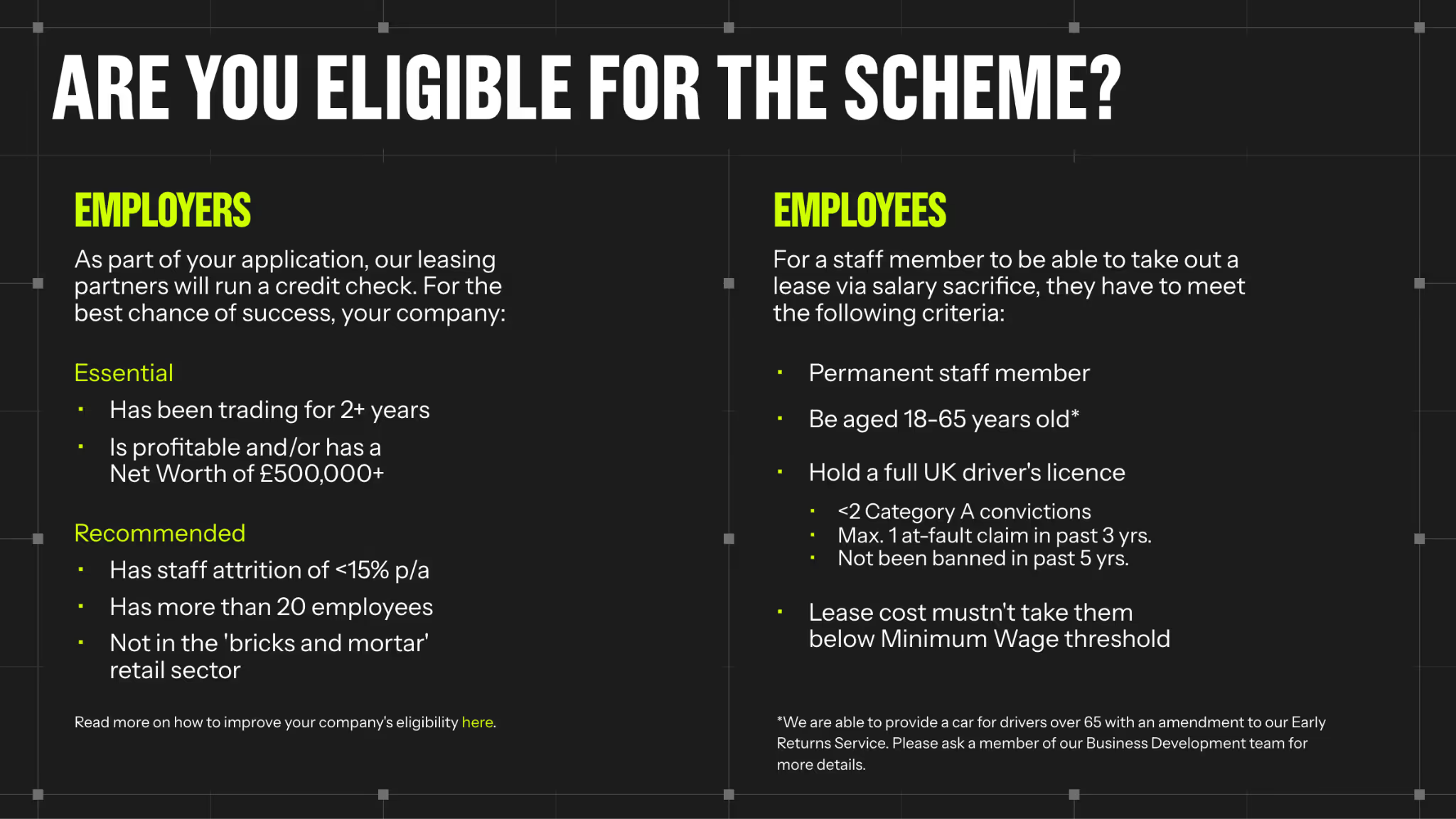
If you're a sole trader or director of a very small company, the scheme may not be structured in a way that suits your setup. Salary sacrifice is designed around an employer-employee relationship, and the eligibility criteria reflect that.
Similarly, if your business already has an established fleet management structure, or if you need the vehicle to sit on the company balance sheet for accounting purposes, a direct lease may be the cleaner route.
It's also worth noting that salary sacrifice requires the deduction to keep employees above the National Minimum Wage threshold. For lower-salaried team members, that can limit which vehicles are available to them or rule out the scheme entirely for some.
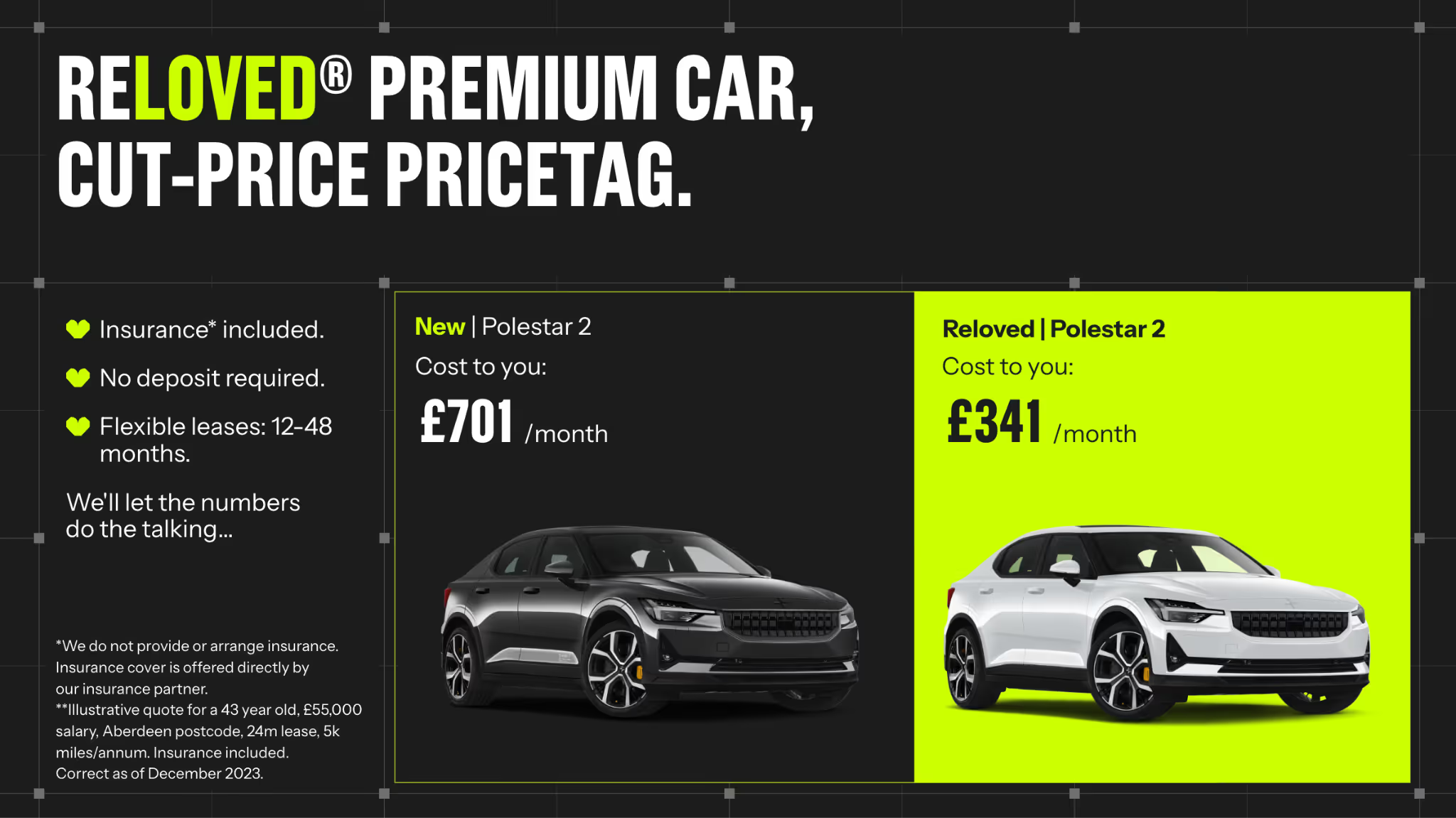
At loveelectric we do offer used EVs as well to make the scheme as accessible as possible.
If you've read this far and salary sacrifice sounds like the right fit, the next step is understanding how to actually get set up. Our guide to how to get a car on salary sacrifice walks through the process from start to finish.
FAQs
Is leasing an electric car tax efficient for a business?
Yes. And more so than leasing a petrol or diesel equivalent. Electric vehicles attract a 3% Benefit-in-Kind rate in 2025/26, compared to 23–37% for combustion engine cars.
Lease payments are fully deductible against corporation tax, and businesses can reclaim 50% of the VAT on monthly payments.
The combination makes a business EV lease one of the more tax-efficient vehicle arrangements available to UK companies right now.
Can I reclaim VAT on a business electric car lease?
Yes, 50% of the VAT on lease payments is reclaimable where the car is used for both business and personal journeys. This covers the vast majority of company cars. If you can demonstrate the vehicle is used exclusively for business, 100% is reclaimable, though HMRC sets a high bar for that in practice.
Any maintenance element included in the lease package is 100% VAT reclaimable regardless.
What is the BIK rate for electric cars in 2026/27?
4%, rising by 1% each year to reach 9% by 2029/30. Those rates are confirmed by HMRC through to the end of the decade, which gives businesses planning multi-year leases a clear picture of the tax landscape ahead.
Is salary sacrifice better than a business lease for an EV?
For most businesses with a team of employees, yes. The cost to the business is neutral, employees save significantly more than they would through a standard company car arrangement, and the admin is minimal.
A business lease has its place, particularly for sole traders and very small companies, but salary sacrifice delivers more value to more people.
How do I get my company set up on salary sacrifice?
The quickest way is to make an enquiry with loveelectric. Most businesses can go live within seven days. If you want to check eligibility first, that takes about a minute via our eligibility checker.

Live monthly prices for popular electric SUVs


Illustrative prices for a 40% taxpayer on a £55,000 salary, 5,000 miles a year on a 48 month term, for the entry derivative of each model. Shows your estimated take home pay reduction; your own price and saving will vary. Prices update daily.
Live monthly prices for popular electric cars


Illustrative prices for a 40% taxpayer on a £55,000 salary, 5,000 miles a year on a 48 month term, for the entry derivative of each model. Shows your estimated take home pay reduction; your own price and saving will vary. Prices update daily.
Live monthly prices for Chinese electric cars


Illustrative prices for a 40% taxpayer on a £55,000 salary, 5,000 miles a year on a 48 month term, for the entry derivative of each model. Shows your estimated take home pay reduction; your own price and saving will vary. Prices update daily.
Live monthly prices for the cheapest electric cars


Illustrative prices for a 40% taxpayer on a £55,000 salary, 5,000 miles a year on a 48 month term, for the entry derivative of each model. Shows your estimated take home pay reduction; your own price and saving will vary. Prices update daily.
Live monthly prices for small electric cars


Illustrative prices for a 40% taxpayer on a £55,000 salary, 5,000 miles a year on a 48 month term, for the entry derivative of each model. Shows your estimated take home pay reduction; your own price and saving will vary. Prices update daily.
Live monthly prices for 7-seat electric cars


Illustrative prices for a 40% taxpayer on a £55,000 salary, 5,000 miles a year on a 48 month term, for the entry derivative of each model. Shows your estimated take home pay reduction; your own price and saving will vary. Prices update daily.