Best Electric Pickup Trucks in the UK 2026: Every Model Compared

_cropped_processed_by_imagy%20(2).avif)
The UK electric pickup market is thin right now, but it's moving fast. Unlike the US, where electric trucks from Ford, Rivian, and Tesla have become mainstream, Britain's pickup drivers have been waiting for manufacturers to catch up. That's finally changing.
Right now, only one purpose-built electric pickup is officially available to order in the UK. But within the next 12 months, established brands including Isuzu and Toyota will launch their own zero-emission workhorses. For tradespeople, small business owners, and fleet managers who've been watching from the sidelines, 2026 marks the year the UK electric pickup market genuinely opens up.
This guide covers three categories: trucks you can buy today, models confirmed or expected soon, and international pickups that may (or may not) make it to British shores. We'll also explain the business case for going electric and how salary sacrifice schemes make these vehicles surprisingly affordable for company users. If you're also considering other electric vehicle types, see our guide to the best electric SUVs.
Electric Pickup Trucks: The UK Market in 2026
Let's be blunt: if you walk into a UK dealership today looking for an electric pickup, your choices are extremely limited. The Maxus T90EV and eTerron 9 are currently the only options on the UK market. Compare that to the US market, where the Ford F-150 Lightning, Rivian R1T, Tesla Cybertruck, and Chevrolet Silverado EV are all available, and it's clear the UK has lagged behind.
Why? Several reasons. First, pickup trucks account for a relatively small slice of the UK vehicle market compared to the US. According to SMMT data, pickups represented around 2.5% of new vehicle registrations in 2024, versus over 20% in America. For manufacturers, that's a smaller addressable market.
Second, right-hand drive tooling adds cost and complexity. Many electric pickups launching globally are left-hand drive only, which rules them out for mainstream UK sales. Third, UK drivers have historically favoured smaller, more efficient vehicles. The stereotype of a "Yank tank" hasn't helped sales of large American-style trucks, even if the reality is changing.
Why is the UK market so limited compared to the US?
It comes down to scale and demand. The US pickup market is enormous, justifying massive R&D investment. Trucks like the Ford F-150 have been America's best-selling vehicle for over 40 years. UK demand simply doesn't justify that level of investment from most manufacturers. Additionally, stringent European emissions regulations have historically made large, heavy vehicles less economically attractive for automakers to sell here.
What's driving manufacturer interest now?
Three factors are converging. First, electric powertrains make large vehicles more economically viable under emissions rules. Second, commercial drivers are increasingly interested in zero-emission fleets to meet corporate sustainability targets and prepare for future urban low-emission zones. Third, the success of electric vans in the UK (from brands like Ford, Mercedes, and Stellantis) has demonstrated a viable market for electric commercial vehicles. Pickups are the next logical step.
The other major driver? Tax. Here's where things get interesting: from April 2025, HMRC reclassified most double-cab pickups as company cars rather than commercial vehicles for benefit-in-kind (BiK) tax purposes. While this initially caused concern in the industry, it has actually created a compelling advantage for electric pickup drivers. Zero-emission vehicles attract just 3% BiK for 2025/26, making electric pickups dramatically cheaper to run through salary sacrifice than their diesel counterparts. We'll explore the numbers later.
Section 1: Electric Pickup Trucks Currently Available to Buy in the UK
Maxus T90EV
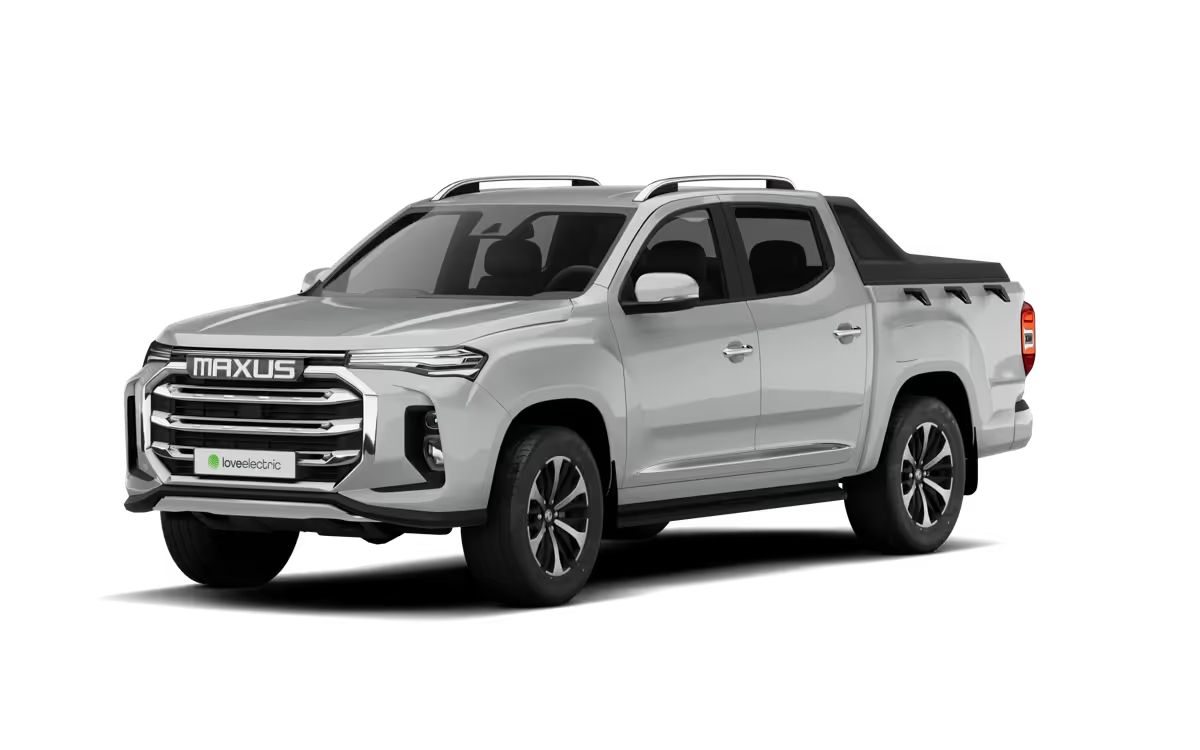
The Maxus T90EV is currently the only purpose-built, fully electric pickup truck officially on sale in the UK. Launched in 2023 by SAIC Motor under the Maxus brand, it offers genuine workhorse capability with zero tailpipe emissions.
Specification Overview:
The T90EV delivers 201 bhp and 310 Nm of torque, which translates to strong low-end pulling power for towing and hauling. The 88.6kWh battery provides a claimed 220 miles of WLTP range. Real-world figures will be lower, especially when towing or carrying heavy loads, but for typical daily commercial use (site visits, deliveries, local journeys), this is workable. In cold weather motorway driving, expect around 130-190 miles.
Towing capacity is rated at 1,500kg. That's enough for a large trailer, small caravan, or plant equipment, but it's below what many diesel pickups offer (typically 3,000–3,500kg). Payload capacity is rated at 1,500kg, which is strong and suitable for most commercial applications.
Charging takes approximately 45 minutes from 0–80% on a DC rapid charger. For daily use, most operators will charge overnight at the depot or home, where a 7kW wallbox can fully replenish the battery in around 12 hours.
Pricing and Incentives:
At the time of writing, Maxus offers a £6,000 conquest programme for drivers switching from competitor brands, plus a free 7kW home charger. Combined, these incentives can reduce the effective purchase price significantly.
Salary Sacrifice Worked Example:
For business users, salary sacrifice through a scheme like loveelectric can make the T90EV highly affordable. Since April 2025, most double-cab pickups (including the T90EV) are classified as company cars for benefit-in-kind tax purposes. Electric vehicles attract a BiK rate of just 3% of the P11D value for 2025/26.
For the T90EV with a P11D value of approximately £60,000 (inc. VAT):
- Annual BiK charge: £60,000 × 3% = £1,800
- Monthly BiK charge: £150
Example: Higher-rate taxpayer (40% income tax, 2% NI)
- Monthly lease cost (estimated): £600
- BiK taxable benefit: £150/month
- Tax payable on BiK: £150 × 40% = £60/month
- National Insurance saving: £600 × 2% = £12/month
- Net monthly cost: £600 + £60 - £12 = £648
Example: Basic-rate taxpayer (20% income tax, 8% NI)
- Monthly lease cost (estimated): £600
- BiK taxable benefit: £150/month
- Tax payable on BiK: £150 × 20% = £30/month
- National Insurance saving: £600 × 8% = £48/month
- Net monthly cost: £600 + £30 - £48 = £582
Compare this to leasing an equivalent diesel pickup privately (£500–£600/month with no tax relief) plus fuel costs (£200–£300/month), and the total cost of ownership through salary sacrifice is substantially lower.
Important Note on Double-Cab Pickup Classification:
From 6 April 2025, HMRC changed how double-cab pickups are classified for tax purposes. Most double-cab pickups are now treated as company cars rather than commercial vehicles (vans). This means they attract car BiK rates based on their P11D value and CO2 emissions, rather than the flat van benefit charge.
For electric pickups, this is actually good news. The 3% BiK rate (2025/26) for zero-emission vehicles is significantly lower than the flat van benefit charge (£4,020 per year for 2025/26) for vehicles valued over approximately £27,000. This makes electric pickups some of the best electric company cars from a tax perspective.
Transitional arrangements apply for vehicles ordered or purchased before 6 April 2025, which may continue to be treated as vans until the earlier of: disposal, lease expiry, or 5 April 2029.
Maxus eTerron 9
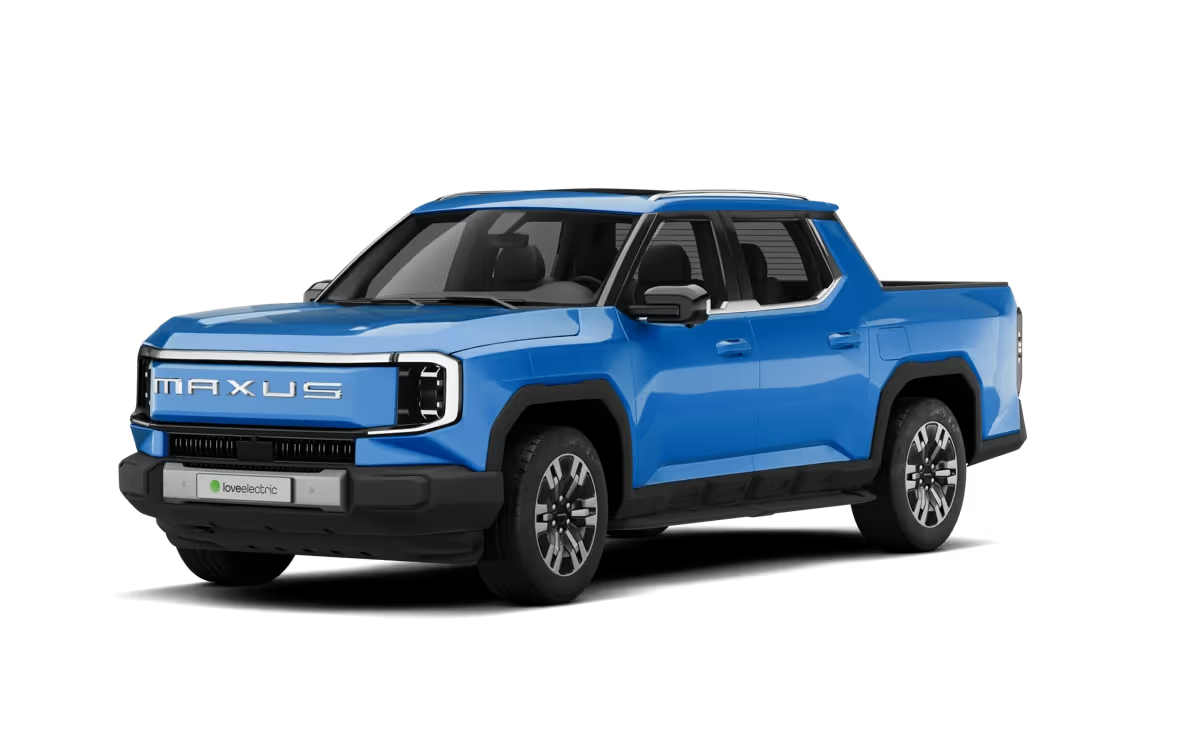
The Maxus eTerron 9 is Europe's first all-electric 4x4 pickup truck and is now available to order in the UK. It's significantly more powerful than the T90EV, with dual electric motors delivering all-wheel drive as standard.
Specification Overview:
The eTerron 9 delivers exceptional performance with 442 bhp from its dual-motor setup (167 bhp front, 268 bhp rear). This makes it one of the most powerful electric pickups available in the UK, with acceleration from 0-60 mph in just 5.8 seconds.
The 102.2kWh battery provides up to 267 miles of WLTP range, significantly better than the T90EV. Towing capacity matches diesel equivalents at 3,500kg, making it suitable for serious work applications.
However, the payload capacity of 620kg is below the 1-tonne threshold that many businesses require to reclaim VAT on commercial vehicle purchases. This positions the eTerron 9 more towards the retail and lifestyle market rather than pure commercial use.
Standard Equipment:
Both Luxury and Premium trims include adaptive air suspension, six driving modes (Normal, Mud, Sand, and others), front and rear heated seats, electric seat adjustment, heated steering wheel, digital rearview mirror, and vehicle-to-load (V2L) functionality. Premium adds leather seats and massage function.
The eTerron 9 comes with a 5-year/60,000-mile vehicle warranty and an 8-year/125,000-mile battery warranty.
Section 2: Electric Pickup Trucks Coming Soon to the UK
Isuzu D-Max EV
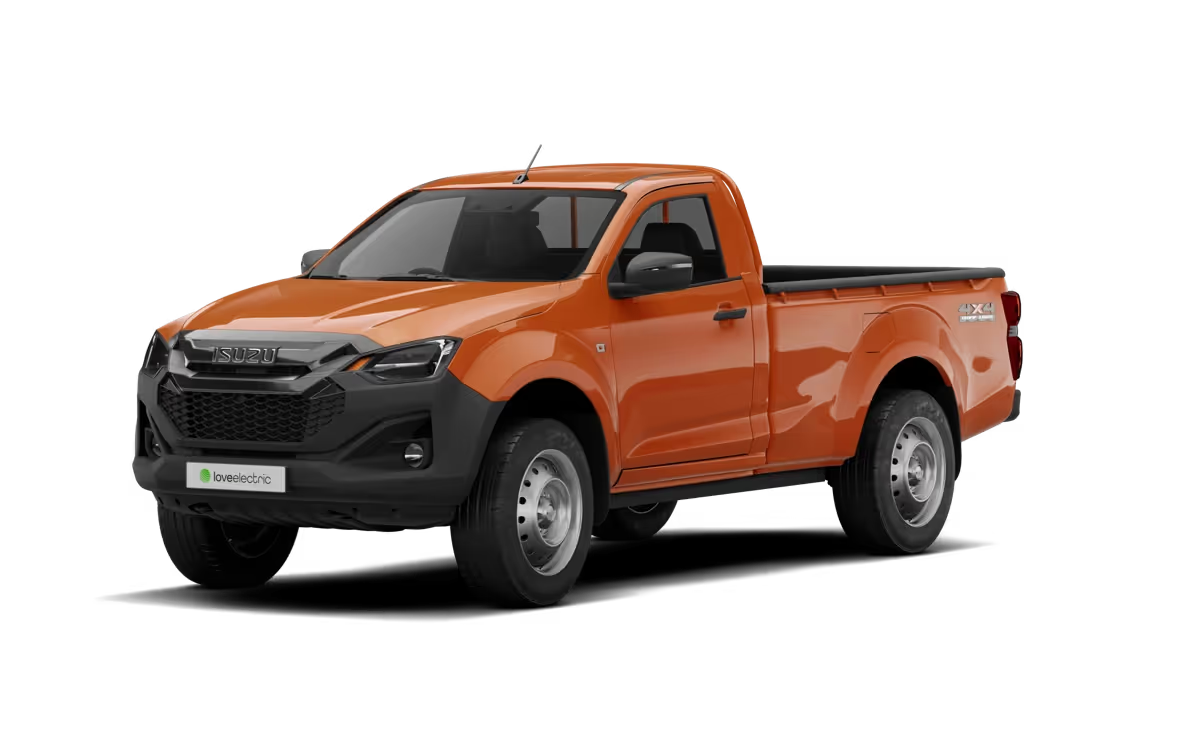
Isuzu has built a formidable reputation in the UK commercial vehicle market over decades. The diesel D-Max is a familiar sight on farms, construction sites, and rural roads across Britain. The D-Max EV promises to bring that same rugged dependability to the electric era.
Specification Overview:
The D-Max EV's headline feature is its towing capacity: 3,500kg, matching its diesel sibling. This is the figure that will matter most to Isuzu's core customer base, farmers and contractors who need to haul livestock trailers, plant equipment, or heavy loads on a daily basis.
At 188 bhp, the power output is modest compared to some competitors, but 325 Nm of torque is substantial and, critically, it's available from zero rpm. This gives the D-Max EV strong pulling power where it counts.
The 163-mile WLTP range is realistic for a working truck. It won't suit long-distance highway hauling with a full load, but for regional work, daily site visits, or farm-to-market runs, it's viable. Most operators will charge overnight and start each day with a full battery.
Isuzu's established dealer network and reputation for reliability should reassure conservative drivers who are new to electric vehicles. If you're currently running a diesel D-Max and considering electric, this is the most natural step.
The D-Max EV is the first fully electric pickup in Europe to offer the combination of over 1-tonne payload, 3.5-tonne towing capacity, and full-time 4x4. It features a new De-Dion rear suspension system (replacing traditional leaf springs), which reduces noise and vibration by up to 10% compared to the diesel version.
Off-road capability remains strong with 210mm ground clearance, 600mm wading depth, and approach/departure angles of 30.5° and 24.2°.
UK Launch Status:
Pre-sales began in July 2025. First UK deliveries are scheduled for February 2026, with customer deliveries starting in March 2026.
Pricing: Confirmed at £59,995 (exc. VAT) for the eDL40 Extended Cab and £62,495 (exc. VAT) for the eV-Cross Double Cab.
Toyota Hilux BEV
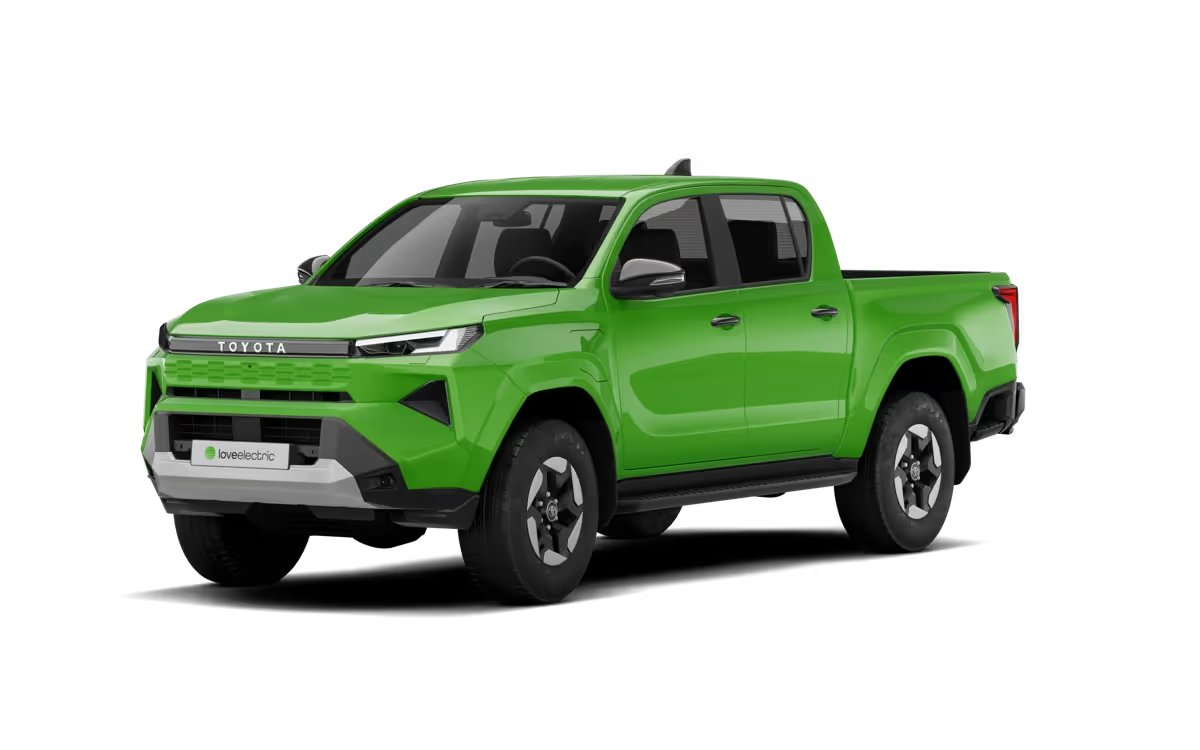
Toyota's Hilux has a legendary reputation for reliability and durability. It's the truck of choice for everyone from farmers to international aid organisations. Toyota has now confirmed that the All-Electric Hilux will be available to order in the UK from June 2026.
Specification Overview:
Key Features:
The All-Electric Hilux is built on Toyota's body-on-frame structure with the 59.2kWh battery mounted within the rigid frame for protection and optimal weight distribution. This design helps maintain the low centre of gravity essential for stability and handling.
The truck features dual eAxle drive units (one front, one rear) delivering four-wheel drive capability with 473.6 Nm of combined torque. Toyota's Multi-Terrain Select system offers five modes (Rock, Sand, Mud, Dirt, and Mogul) to optimise performance across different off-road conditions.
The 159-mile WLTP range is the most conservative figure among UK electric pickups, but it's designed for real-world working conditions. Range will vary based on load, terrain, and driving style, as with all electric vehicles.
Important Note on Payload and Towing:
The All-Electric Hilux offers 715kg payload and 1,600kg towing capacity. These figures are lower than the diesel Hilux (which offers over 1 tonne payload and 3,500kg towing) and below what many businesses require. The 715kg payload means it does NOT qualify as a commercial vehicle for UK tax purposes (which requires 1,000kg+). However, for drivers prioritising zero emissions over maximum capacity, it remains a capable working vehicle with Toyota's legendary reliability.
UK Availability:
Orders open in June 2026. Toyota UK is accepting sign-ups now for customers who want to be among the first to order. The All-Electric Hilux will sit alongside the diesel Hilux in Toyota's UK lineup, giving drivers the choice between zero-emission electric power and the proven 2.8D 48V mild-hybrid diesel.
Section 3: Electric Pickups Available Elsewhere: Could They Come to the UK?
Tesla Cybertruck (LHD Only)
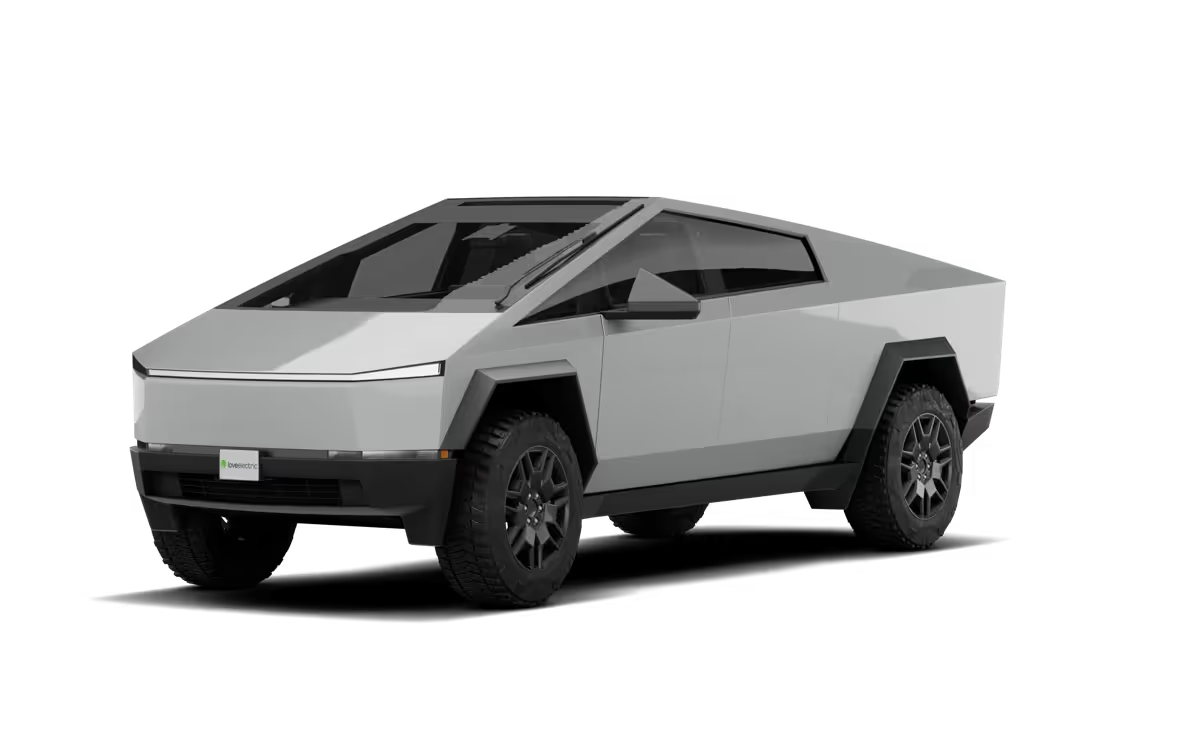
The Tesla Cybertruck is perhaps the world's most talked-about electric pickup. Its angular, stainless steel exoskeleton design has divided opinion, but its specifications are undeniably impressive: up to 845 bhp in tri-motor form, a claimed 340-mile EPA range, and towing capacity up to 4,990kg.
Specification Overview:
The UK Reality:
Tesla has not confirmed any plans for a right-hand-drive Cybertruck. The vehicle is currently available only in left-hand drive and is sold exclusively in the United States. This creates significant barriers for UK drivers.
Can you import one? Technically, yes. Some specialist importers are bringing left-hand-drive Cybertrucks into the UK, but this route carries substantial practical implications:
- Driving Position: Operating a left-hand-drive vehicle on British roads is legal but awkward, particularly for overtaking, navigating roundabouts, and judging distances on narrow country lanes.
- MOT and Type Approval: Imported vehicles must pass UK type approval and MOT testing. The Cybertruck's unique construction may complicate this process.
- Insurance: Finding an insurer willing to cover a left-hand-drive import can be challenging and expensive.
- Resale Value: The market for left-hand-drive vehicles in the UK is extremely limited, which will impact resale value significantly.
- Supercharger Access: Tesla's UK Supercharger network is designed for right-hand-drive vehicles. Charging port location on the Cybertruck may make some stalls difficult or impossible to use without blocking other spaces.
For most UK drivers, the Cybertruck remains aspirational rather than practical. Unless Tesla announces a RHD version, it will stay that way.
Verify Before Publishing: Check for any Tesla announcements regarding RHD production at time of writing.
Ford F-150 Lightning (US Only)
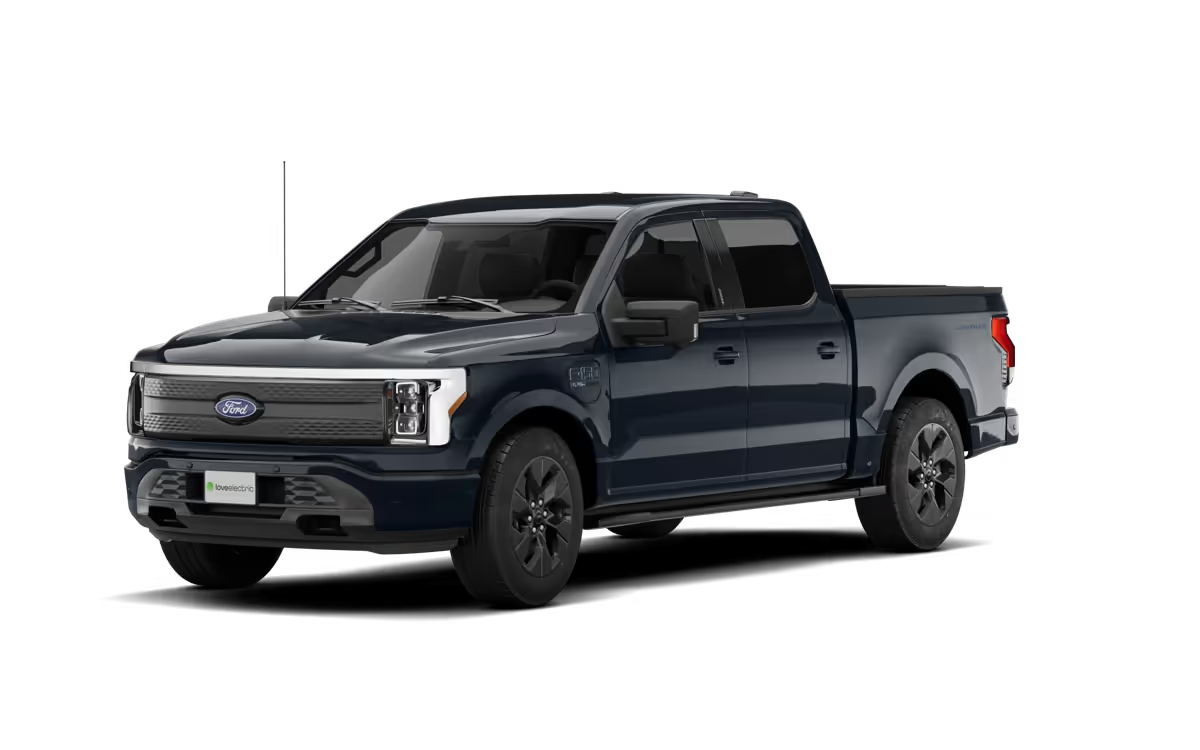
The Ford F-150 Lightning is the electric version of America's best-selling vehicle. It combines the familiar F-150 truck body with dual electric motors, a large battery pack, and a unique feature: Pro Power Onboard.
Specification Overview:
Pro Power Onboard Explained:
The F-150 Lightning's standout feature is its ability to export power. The truck can supply up to 9.6kW of electricity through standard plug sockets in the bed and frunk (front trunk). This effectively turns the Lightning into a mobile generator capable of powering tools on a work site, running appliances at an outdoor event, or even supplying a home during a power outage.
For tradespeople, this is a genuinely useful feature. A single F-150 Lightning can run power tools, compressors, lights, and equipment without needing a separate generator or access to mains power.
UK Availability:
Ford has not announced any plans to bring the F-150 Lightning to the UK. The truck is left-hand drive only, and given Ford's existing presence in the UK commercial vehicle market with the Transit and Ranger, it's unclear whether the company sees a business case for importing the Lightning.
As with the Cybertruck, determined UK drivers can arrange private imports, but the same complications apply: left-hand-drive awkwardness, insurance challenges, type approval hurdles, and the question of charging infrastructure compatibility (the Lightning uses CCS in the US, but Ford's transition to Tesla's NACS connector adds another variable).
Rivian R1T (Potential 2027 European Launch)
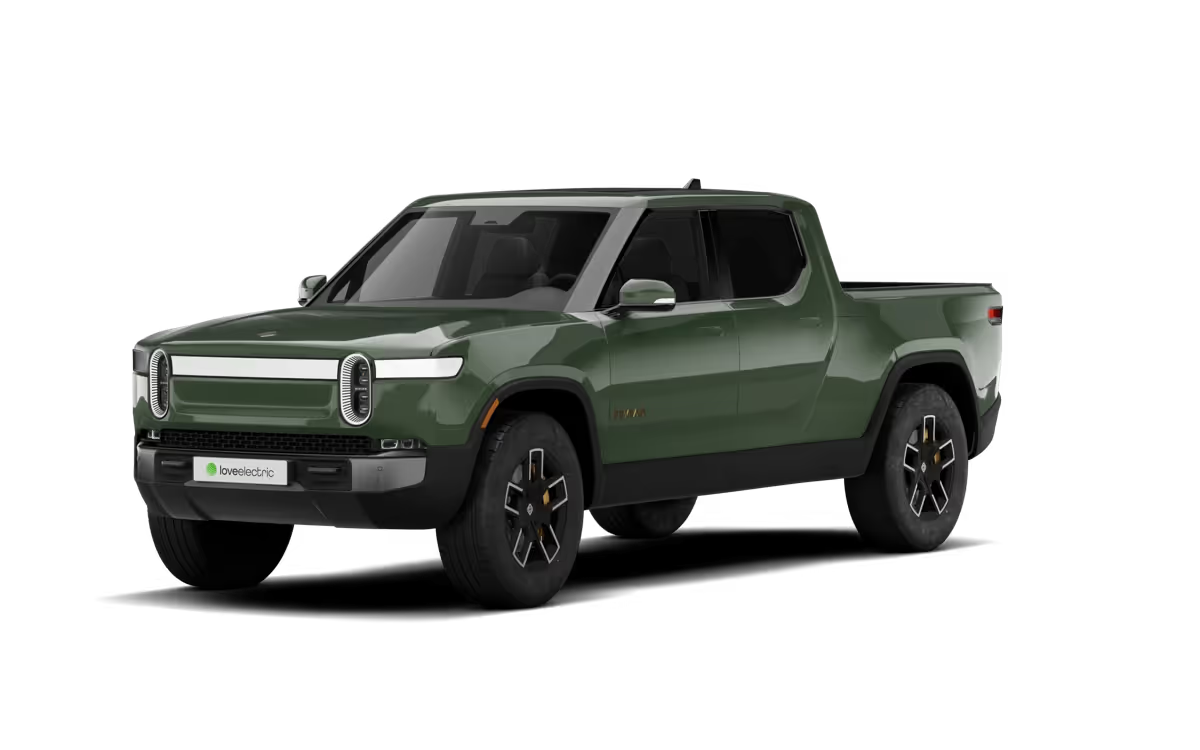
The Rivian R1T is a premium electric adventure truck that has won widespread acclaim for its design, performance, and innovation. With quad-motor all-wheel drive, air suspension, and clever storage solutions like the "gear tunnel" (a cross-body storage compartment accessible from both sides of the truck), the R1T feels more like a luxury SUV with a bed than a traditional pickup.
Specification Overview:
UK Presence:
While Rivian does not officially sell the R1T in the UK, there is growing brand awareness here. UK drivers can rent an R1T through EVision, a luxury EV rental service, and Rivian has showcased vehicles at events such as Diggerland Adventure Park in Kent.
Rivian has indicated that European sales could begin around 2027, but the company has not confirmed whether this includes right-hand-drive production or UK-specific availability. Given Rivian's premium positioning and the success of brands like Tesla and Polestar in the UK, there is certainly a potential market, particularly among affluent drivers interested in overlanding, outdoor pursuits, or simply a distinctive vehicle.
Electric Pickups vs Diesel: The Business Case
For business drivers considering electric pickups, the question isn't whether electric can work but whether the numbers make sense. Let's break it down.
Towing & Payload Comparison
Towing:
Traditional diesel pickups like the Toyota Hilux, Ford Ranger, and Isuzu D-Max typically offer 3,000–3,500kg towing capacity. The electric pickups arriving in the UK (Isuzu D-Max EV, Toyota Hilux BEV) match this. The Maxus T90EV's 1,500kg rating is lower and may not suit drivers who regularly tow heavy trailers, but the Maxus eTerron 9 offers the full 3,500kg.
The advantage electric pickups have when towing is instant torque. Diesel engines need to build boost from the turbocharger before delivering full pulling power; electric motors deliver maximum torque from 0 rpm. In practical terms, this means smoother, more confident acceleration when pulling away with a load.
The disadvantage is range. Towing significantly increases energy consumption. Expect range to drop by 30–50% when towing near maximum capacity, depending on trailer weight, aerodynamics, and speed. For long-distance towing (over 100 miles), this may require charge stops, which adds time.
Payload:
Electric pickups generally match diesel equivalents for payload. The Maxus T90EV offers 1,500kg, and the Isuzu D-Max EV offers 1,000kg+. These figures are comparable to diesel trucks and sufficient for most commercial applications.
Running Cost Comparison Table
Let's compare the Maxus T90EV to a Toyota Hilux diesel over three years of typical business use (12,000 miles/year).
Note: If either vehicle has a P11D value over the expensive car threshold (£50,000 for EVs, £40,000 for diesel), an additional £425/year VED supplement applies for years 2-6, adding £1,275 over three years. The Maxus T90EV is likely to trigger this supplement with a P11D around £60,000.
The diesel truck has a lower purchase price, but the T90EV saves around £6,660–£6,660 in running costs over three years. This doesn't yet account for the tax advantages available through salary sacrifice, which we'll cover next.
The April 2025 Tax Change: Good News for Electric Pickup Drivers
Here's where electric pickups become genuinely compelling for company users.
From 6 April 2025, HMRC reclassified most double-cab pickups as company cars rather than commercial vehicles (vans) for benefit-in-kind tax purposes. While this initially caused concern in the industry, it has actually created a significant advantage for electric pickup drivers thanks to the electric car company tax benefits available.
Why This Benefits Electric Pickups:
Under the old classification, pickups were treated as vans with a flat benefit-in-kind charge of £4,020 per year (2025/26 rate).
Under the new classification, pickups are treated as cars with BiK calculated as a percentage of the vehicle's P11D value based on CO2 emissions.
For electric vehicles (zero emissions), the BiK rate for 2025/26 is just 3%. This is the same benefit-in-kind electric cars rate that applies to all zero-emission company vehicles.
The Math:
For a £60,000 electric pickup (P11D value inc. VAT):
- Old van classification: £4,020/year BiK charge
- New car classification: £60,000 × 3% = £1,800/year BiK charge
- Annual saving: £2,220
For expensive pickups, the car classification is significantly more favourable than the old van treatment.
Important Notes:
- Transitional arrangements apply for vehicles ordered or purchased before 6 April 2025, which may continue to be treated as vans until the earlier of: disposal, lease expiry, or 5 April 2029
- The electric vehicle car BiK rate will increase annually: 3% (2025/26), 4% (2026/27), 5% (2027/28), rising by 2% annually thereafter until capping at 9% in 2029/30
- Even at 9%, electric pickups will remain far more tax-efficient than diesel equivalents (typically 30–37% BiK)
Getting an Electric Pickup via Salary Sacrifice
Salary sacrifice is a scheme that allows employees to lease a vehicle through their employer, paying for it from gross salary (before tax and National Insurance are deducted). This reduces taxable income and generates significant savings. To understand the full picture, read our guide to salary sacrifice car scheme pros and cons.
How Salary Sacrifice Works for Electric Pickups
With salary sacrifice, you lease a vehicle through your employer. The monthly lease cost is taken from your gross salary (before tax), which means you pay less income tax and National Insurance. However, you do pay tax on the "benefit" of having a company vehicle, called Benefit-in-Kind (BiK).
Here's how the tax works:
Double-cab pickups are now classified as company cars for tax purposes. Electric vehicles have a BiK rate of 3% for 2025/26.
This means:
- HMRC values the benefit of your electric pickup at 3% of its list price per year
- You pay income tax on that benefit value
- But you save tax and National Insurance on the salary you sacrifice
Simple Example: Maxus T90EV (£60,000 list price)
Monthly lease cost: £600
The benefit-in-kind calculation:
- £60,000 × 3% = £1,800 per year
- £1,800 ÷ 12 = £150 per month (this is the "benefit" added to your taxable income)
Your actual monthly cost:
Basic-rate taxpayer (20% tax): £462/month
- You save £168 in tax and National Insurance on the £600
- You pay £30 tax on the £150 benefit
- Net cost: £600 - £168 + £30 = £462
Higher-rate taxpayer (40% tax): £408/month
- You save £252 in tax and National Insurance on the £600
- You pay £60 tax on the £150 benefit
- Net cost: £600 - £252 + £60 = £408
Compare this to a diesel pickup (30% BiK):
The same £60,000 diesel pickup would cost a higher-rate taxpayer £948/month through salary sacrifice.
The electric pickup saves £540 per month compared to diesel.
Future Tax Considerations
eVED (Electric Vehicle Excise Duty):
From April 2028, the government will introduce a pay-per-mile charge for electric vehicles called eVED. This will be 3p per mile for pure electric vehicles, charged in addition to standard VED. Learn more by reading our guide on the 3p-per-Mile EV tax.
For an average driver covering 8,000 miles per year, this adds approximately £240 annually (£20/month). While this reduces the cost advantage of EVs slightly, electric pickups will still offer substantial savings compared to diesel alternatives when you factor in lower fuel costs and BiK rates.
Ready to see how much you could save on an electric pickup through salary sacrifice? Search cars and configure your personal quote.
Electric Pickup Trucks UK: FAQs
Can I tow with an electric pickup?
Yes. The Isuzu D-Max EV and Maxus eTerron 9 both offer 3,500kg towing capacity, matching diesel equivalents. The Toyota Hilux BEV offers 1,600kg and the Maxus T90EV offers 1,500kg, which are sufficient for smaller trailers but below the capabilities of most diesel trucks.
Electric pickups benefit from instant torque, which makes towing feel smoother and more confident. However, range will drop significantly when towing (expect 30–50% reduction), so plan charging stops accordingly for longer journeys.
Are electric pickups available in right-hand drive?
Currently, yes. The Maxus T90EV and eTerron 9 are both available in RHD for the UK market. The Isuzu D-Max EV is confirmed as RHD and deliveries begin in February 2026. The Toyota Hilux BEV will be RHD when orders open in June 2026.
International models like the Tesla Cybertruck, Ford F-150 Lightning, and Rivian R1T are currently left-hand drive only. These can be imported into the UK, but this carries significant practical challenges (driving position, insurance, resale value). Unless RHD versions are confirmed, these remain aspirational rather than practical choices for most UK drivers.
Can I get an electric pickup on salary sacrifice?
Yes. Electric pickups are available through salary sacrifice schemes like loveelectric. Since April 2025, most double-cab pickups are classified as company cars for tax purposes and attract a 3% BiK rate for electric vehicles (2025/26). This creates substantial tax savings compared to both private purchase and diesel alternatives.
Always verify the specific HMRC classification of the vehicle you're interested in, as rules can change. Search cars for a personalised quote.
What's the real-world range of an electric pickup?
Official WLTP range figures for current and upcoming UK models range from 163–220 miles for confirmed models (Maxus T90EV, Isuzu D-Max EV). Real-world range will be lower, particularly in cold weather, when carrying heavy loads, or when towing.
For typical commercial use (daily site visits, deliveries, local journeys), a 163-220 mile range is workable. Most operators will charge overnight at the depot or home. For long-distance work or regular towing, plan for more frequent charging stops.
Are electric pickups taxed as vans or cars?
Since 6 April 2025, most double-cab pickups are classified as company cars for benefit-in-kind tax purposes, not commercial vehicles (vans). This means they attract car BiK rates based on the vehicle's P11D value and CO2 emissions.
For electric pickups, the BiK rate is 3% for 2025/26 (rising annually to a cap of 9% in 2029/30). For a typical £60,000 electric pickup, this results in a lower BiK charge than the previous flat van rate.
Transitional arrangements apply for vehicles ordered before 6 April 2025, which may continue to be treated as vans until the earlier of: disposal, lease expiry, or 5 April 2029.
Do electric pickups pay road tax?
Yes. From April 2025, electric vehicles including pickups pay Vehicle Excise Duty (VED). For EVs registered from April 2025 onwards, the first year rate is £10, then £195 per year from year two (increasing to £200 from April 2026).
Additionally, electric pickups with a list price over £50,000 (including VAT and options) are subject to the expensive car supplement of £425 per year for five years from year two, bringing the total to £620 per year (or £625 from April 2026).
Note: The £50,000 threshold for the expensive car supplement applies from 1 April 2026 for electric vehicles, but is backdated to vehicles registered from 1 April 2025. This means if you bought an electric pickup between £40,000-£50,000 after 1 April 2025, you won't pay the supplement. For petrol and diesel vehicles, the threshold remains £40,000.
When will more electric pickups be available in the UK?
The Isuzu D-Max EV launches in February/March 2026 with confirmed pricing. The Toyota Hilux BEV opens for orders in June 2026. The Maxus eTerron 9 is available to order now. Always verify launch dates directly with manufacturers as plans can change.
The UK electric pickup market is genuinely opening up after years of limited choice. By the end of 2026, drivers should have several credible options across different price points and capability levels.
Live monthly prices for popular electric SUVs


Illustrative prices for a 40% taxpayer on a £55,000 salary, 5,000 miles a year on a 48 month term, for the entry derivative of each model. Shows your estimated take home pay reduction; your own price and saving will vary. Prices update daily.
Live monthly prices for popular electric cars


Illustrative prices for a 40% taxpayer on a £55,000 salary, 5,000 miles a year on a 48 month term, for the entry derivative of each model. Shows your estimated take home pay reduction; your own price and saving will vary. Prices update daily.
Live monthly prices for Chinese electric cars


Illustrative prices for a 40% taxpayer on a £55,000 salary, 5,000 miles a year on a 48 month term, for the entry derivative of each model. Shows your estimated take home pay reduction; your own price and saving will vary. Prices update daily.
Live monthly prices for the cheapest electric cars


Illustrative prices for a 40% taxpayer on a £55,000 salary, 5,000 miles a year on a 48 month term, for the entry derivative of each model. Shows your estimated take home pay reduction; your own price and saving will vary. Prices update daily.
Live monthly prices for small electric cars


Illustrative prices for a 40% taxpayer on a £55,000 salary, 5,000 miles a year on a 48 month term, for the entry derivative of each model. Shows your estimated take home pay reduction; your own price and saving will vary. Prices update daily.
Live monthly prices for 7-seat electric cars


Illustrative prices for a 40% taxpayer on a £55,000 salary, 5,000 miles a year on a 48 month term, for the entry derivative of each model. Shows your estimated take home pay reduction; your own price and saving will vary. Prices update daily.