7 Best Electric Company Cars for 2026

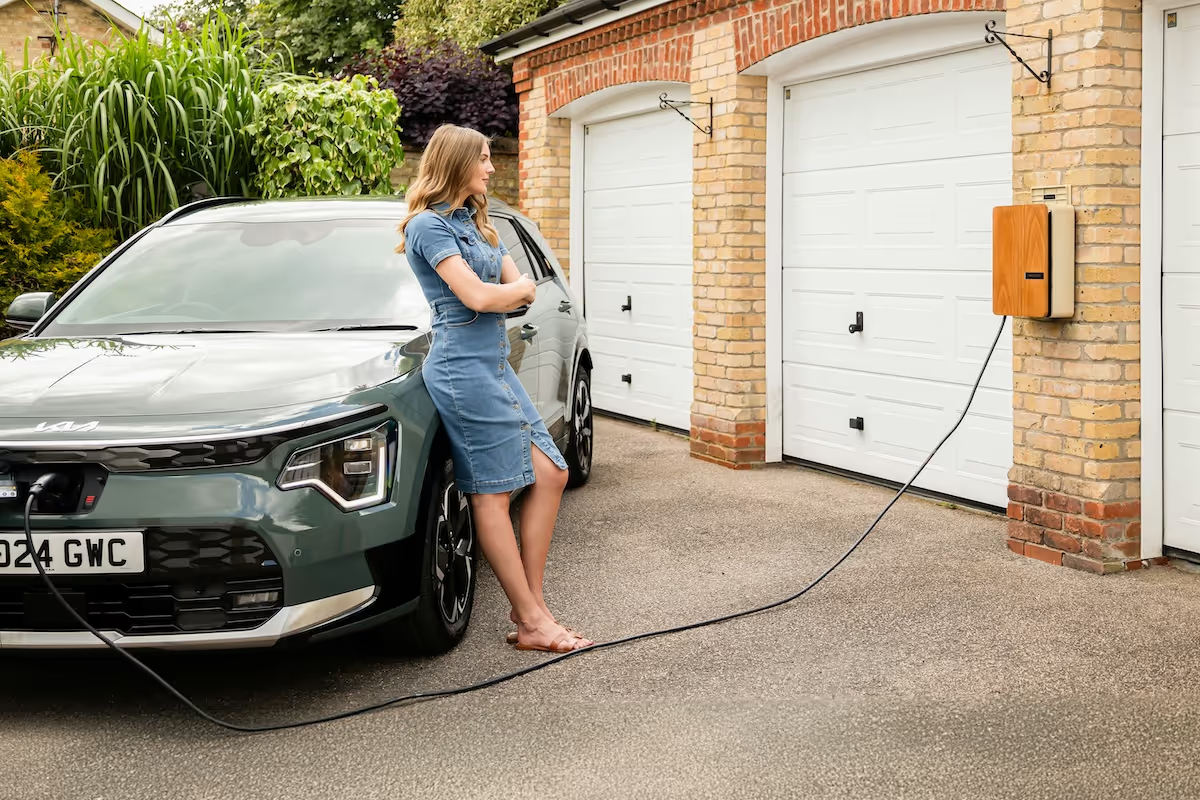
In this guide, we’ve picked out the seven electric cars that work best as company cars in the UK for 2026, balancing low Benefit-in-Kind tax, real-world range, comfort, and suitability for everyday work use.
We’ll also look at how these same cars can be accessed through salary sacrifice with loveelectric, not as a replacement for traditional company cars, but as an alternative way for employers to offer electric vehicles as a benefit.
For many employees, this means access to higher-quality EVs with clearer costs and more choice, even where a company car wouldn’t normally be available.
Our methodology: How we determined who made the list
The best electric company cars need to balance low tax, everyday usability, and professional appeal. For this list, we focused on electric vehicles that make sense in a company car context, whether for commuting, business travel, or mixed work and personal use.
To determine which cars made the cut, we assessed each model against a consistent set of criteria:
- Benefit-in-Kind (BIK) efficiency
- real-world driving range
- comfort and technology for regular business use
- interior quality
- Reliability
- overall professional image
We also considered driver feedback and how well each car fits typical company car requirements, from higher-mileage roles to more urban-based positions.
Crucially, we prioritised electric cars that offer strong all-round value as electric vehicles in 2026, cars that employees actually want to drive and employers feel confident offering.
You may also like: How to Get a Company Car: A Guide for Directors, CXOs, and Employees
7 Best electric company cars (at a glance)
Short on time? Here’s a quick at-a-glance summary of the best electric company cars in 2026, before we break each one down in more detail.
1. Tesla Model 3 – Best electric company car overall
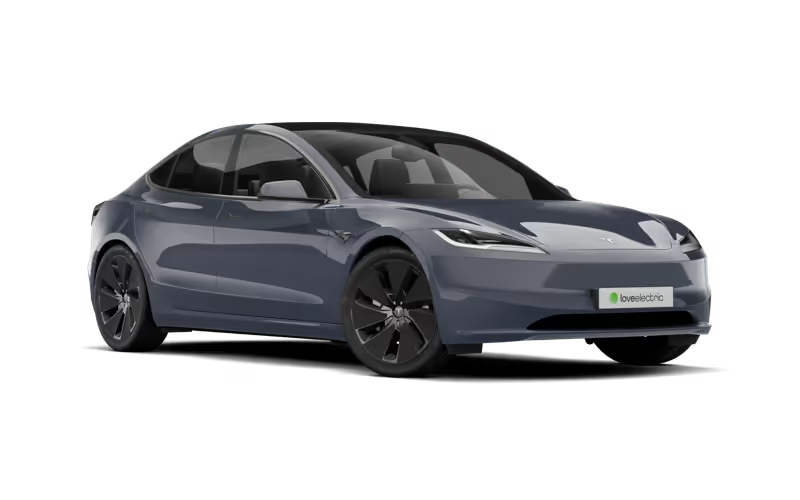
The Tesla Model 3 remains one of the most compelling electric company cars you can choose in 2026. It combines low Benefit-in-Kind tax, excellent real-world range, and effortless long-distance ability, making it particularly well suited to drivers who use their company car regularly for work.
For motorway driving and business travel, few EVs feel as easy to live with. Strong efficiency means fewer charging stops, while access to Tesla’s Supercharger network adds confidence for longer journeys.
Inside, the minimalist cabin won’t appeal to everyone, but it does feel modern and professional, with over-the-air software updates helping the car stay current throughout its life.
Price
From ~£39,990 if buying outright.
Get a quote here to see what this car would cost on salary sacrifice at your tax bracket.
Key specifications
- Body style: Electric saloon
- Seating: 5
- Range: Up to ~344 miles WLTP (RWD)
- Battery: Approx. 60 kWh (usable, model dependent)
- Drivetrain: Rear-wheel drive (RWD)
- Charging: DC rapid charging up to ~170 kW
- Tech: Large central touchscreen, advanced driver-assist systems, OTA software updates
- Warranty: 4 years / 50,000 miles (vehicle), 8 years / 100,000 miles (battery & drive unit)
Our take
Where the Tesla Model 3 really stands out as a company car is how little compromise it asks of the driver. It feels like a car you’d choose anyway, not one you’ve settled for because of tax rules or company policy. That matters. Especially for employees who rely on their car every day for work.
It’s also one of the few EVs that works equally well for shorter commutes and regular long-distance business travel, which makes it easier for employers to offer it across different roles.
If your priority is keeping drivers happy while maintaining low tax and predictable costs, the Model 3 remains one of the safest all-round company car choices for 2026.
2. Volkswagen ID.3 – Best electric company car for everyday work use
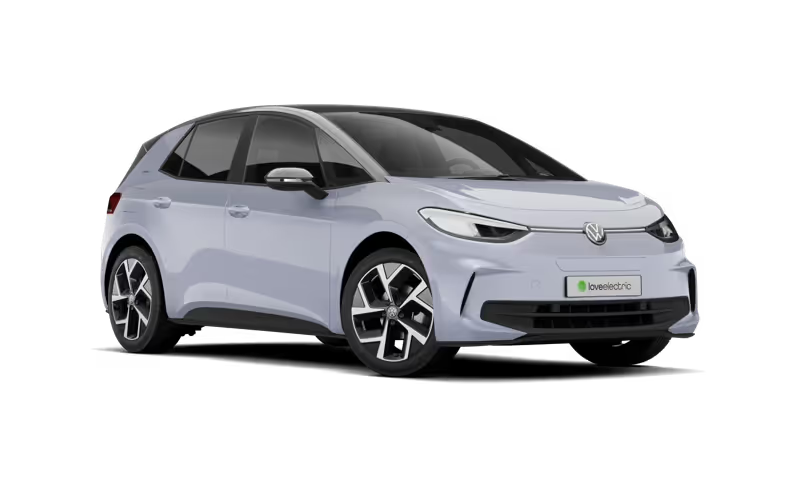
The Volkswagen ID.3 is one of the most well-balanced electric company cars on the market, making it an easy fit for a wide range of roles and drivers.
It offers a more understated, traditional feel than some rivals, which works well in a professional setting where not every employee wants their company car to stand out.
From a day-to-day perspective, the ID.3 is comfortable, quiet, and easy to drive, whether that’s commuting, visiting clients, or covering longer regional journeys. It also offers a good amount of interior space for its size, making it practical enough to work as a main household car as well as a business vehicle.
Recent updates have improved both interior quality and infotainment, addressing early criticisms and making the current model a far more polished proposition.
Price
From ~£30,850 if buying outright.
Get a quote here to see what this car would cost on salary sacrifice at your tax bracket.
Key specifications
- Body style: Electric hatchback
- Seating: 5
- Range: Up to ~369 miles WLTP (battery dependent)
- Battery options: 52 kWh, 59 kWh, 79 kWh
- Drivetrain: Rear-wheel drive
- Charging: DC rapid charging up to ~185 kW (battery dependent)
- Tech: Digital driver display, central touchscreen infotainment, comprehensive driver-assist systems
- Warranty: 3 years / 60,000 miles (vehicle), 8 years / 100,000 miles (battery)
Our take
This car is neutral in the best possible way: professional, practical, and easy to justify across different teams and seniority levels. If the Tesla Model 3 suits drivers who want something more overtly tech-led, the ID.3 is ideal for those who prefer a familiar, no-drama company car that still delivers low tax and everyday comfort.
3. BMW i4 Gran Coupe– Best premium electric company car
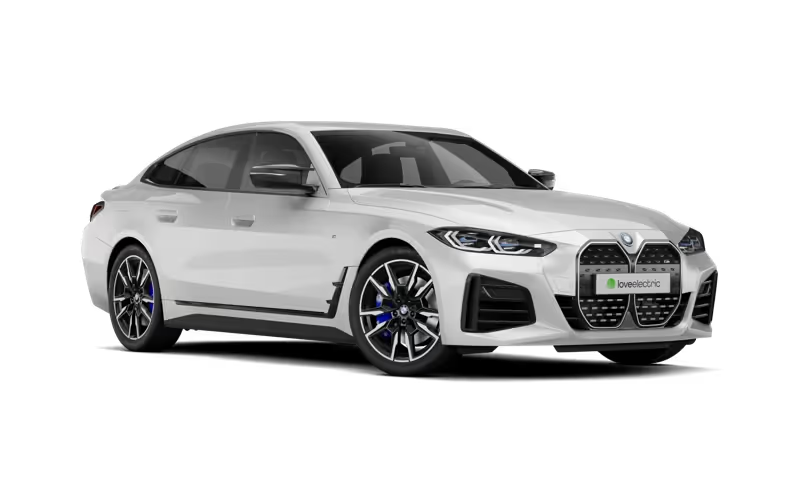
The BMW i4 Gran Coupé is the natural premium step up for drivers who want their company car to feel more refined and more prestigious, without sacrificing practicality or everyday usability. Its sleek fastback design strikes a balance between executive saloon and sporty coupé, making it particularly well suited to senior and client-facing roles.
Inside, the i4 Gran Coupé delivers the level of comfort and build quality you’d expect from BMW. The cabin feels calm, well-finished, and focused on the driver, which pays dividends on longer journeys. Despite its premium positioning, it remains a genuinely usable company car, with good rear-seat space, a practical boot, and strong motorway efficiency for business travel.
Price
From ~£52,000 (model and battery dependent)
Get a quote here to see what this car would cost on salary sacrifice at your tax bracket.
Key specifications
- Body style: Electric Gran Coupé / fastback
- Seating: 5
- Range: Up to ~365 miles WLTP (variant dependent)
- Battery: Approx. 81 kWh (usable, model dependent)
- Drivetrain: Rear-wheel drive or all-wheel drive (variant dependent)
- Charging: DC rapid charging up to ~205 kW
- Technology: Curved BMW display, advanced driver-assistance systems, premium infotainment
- Warranty: 3 years / unlimited mileage (vehicle), 8 years / 100,000 miles (battery)
Our take
It feels meaningfully more premium than mainstream EVs, but without tipping into unnecessary excess. For businesses offering tiered company car options, it’s an excellent choice at the upper end of the scale: polished, professional, and genuinely enjoyable to drive.
4. Kia Niro EV – Best practical electric company car for employees with families
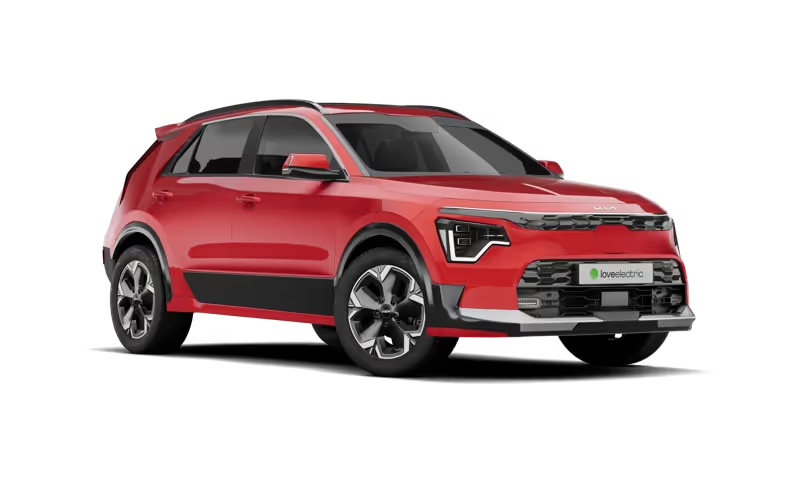
The Kia Niro EV is one of the most straightforward and dependable electric company cars you can choose in 2026. Its crossover shape gives drivers a higher seating position and extra practicality, without the size or running costs of a larger SUV, making it particularly well suited to everyday work use.
It’s an easy car to live with. The cabin is spacious, visibility is good, and there’s enough boot space for work equipment, luggage, or family life outside the working week. The Niro EV also feels calm and comfortable on longer journeys, which matters for employees who use their company car regularly rather than occasionally. Add Kia’s strong reliability reputation and long warranty, and it’s a reassuring option for both drivers and employers.
You may also like: 11 Best Family Electric Cars in 2026: Safe, Comfortable EVs
Price
From ~£37,325
Get a quote here to see what this car would cost on salary sacrifice at your tax bracket.
Key specifications
- Body style: Electric crossover / compact SUV
- Seating: 5
- Range: Up to ~285 miles WLTP
- Battery: 64.8 kWh
- Drivetrain: Front-wheel drive
- Charging: DC rapid charging up to ~80 kW
- Tech: Dual-screen dashboard, advanced driver-assistance systems
- Warranty: 7 years / 100,000 miles (vehicle & battery)
Our take
The Kia Niro EV is a sensible choice for company car drivers who prioritise comfort, space, and predictability over performance or prestige. It doesn’t try to impress with flashy design or headline figures. Instead, it delivers a reliable, low-stress ownership experience that works well across a wide range of roles.
5. Polestar 2 – Best design-led electric company car
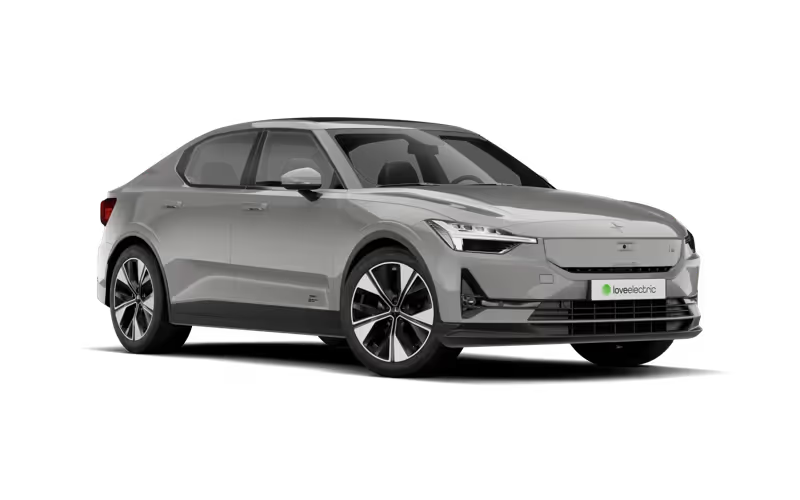
The Polestar 2 is a strong option for drivers who want a premium electric company car that feels modern and distinctive without being showy. Its clean, minimalist design and restrained branding give it a professional, understated presence that works particularly well in client-facing or senior roles.
Inside, the Polestar 2 focuses on simplicity and quality. The cabin feels solid and well finished, with an intuitive layout and Google-built-in infotainment that’s especially easy to use day to day. On the road, it’s comfortable and composed rather than sporty, making it well suited to commuting and longer business journeys alike. While it’s not the most spacious car in its class, it strikes a good balance between style, comfort, and everyday usability.
Price
From ~£45,000 (variant dependent)
Get a quote here to see what this car would cost on salary sacrifice at your tax bracket.
Key specifications
- Body style: Electric fastback
- Seating: 5
- Range: Up to ~406 miles WLTP (Long Range Single Motor)
- Battery: 69 kWh or 82 kWh (variant dependent)
- Drivetrain: Front-wheel drive or all-wheel drive (variant dependent)
- Charging: DC rapid charging up to ~205 kW
- Technology: Google built-in infotainment, advanced driver-assistance systems
- Warranty: 3 years / 60,000 miles (vehicle), 8 years / 100,000 miles (battery)
Our take
It’s a compelling alternative to more obvious executive EVs, offering something a little different while still fitting neatly into modern company car and salary sacrifice schemes. For businesses that want their fleet to look progressive without being polarising, the Polestar 2 is an excellent choice.
6. Hyundai Kona Electric – Best electric company car for real-world range
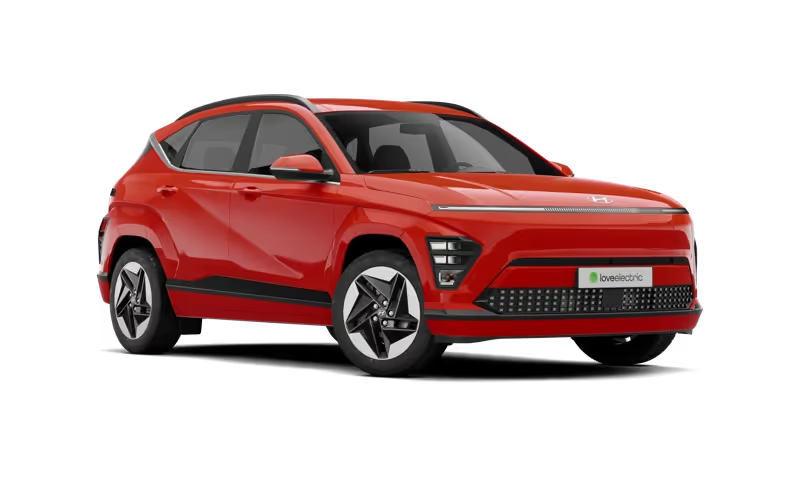
The Hyundai Kona Electric is a strong choice for company car drivers who value range, efficiency, and ease of ownership above all else.
Its compact crossover shape makes it easy to manoeuvre in urban environments, while still offering enough space and comfort for longer commutes and regular business travel.
Hyundai’s focus on efficiency pays off in everyday use, helping drivers get close to the Kona Electric’s official range figures without needing to constantly think about charging. The interior is practical and well laid out, with clear controls and good visibility, a combination that works particularly well for drivers spending a lot of time behind the wheel.
It’s not a flashy car, but it feels well engineered and dependable.
Price
From ~£34,995
Get a quote here to see what this car would cost on salary sacrifice at your tax bracket.
Key specifications
- Body style: Electric crossover
- Seating: 5
- Range: Up to ~319 miles WLTP
- Battery options: 65.4 kWh
- Drivetrain: Front-wheel drive
- Charging: DC rapid charging up to ~100 kW
- Warranty: 5 years / unlimited mileage (vehicle), 8 years / 100,000 miles (battery)
Our take
The Hyundai Kona Electric is a dependable, no-nonsense company car that rewards drivers who prioritise range confidence and predictability. It’s particularly well suited to regional roles or mixed urban and motorway driving, where consistent real-world efficiency matters more than prestige. For employers, it’s an easy car to justify; for drivers, it’s an easy car to live with.
7. Renault 5 E-Tech Electric – Best lower-cost electric company car
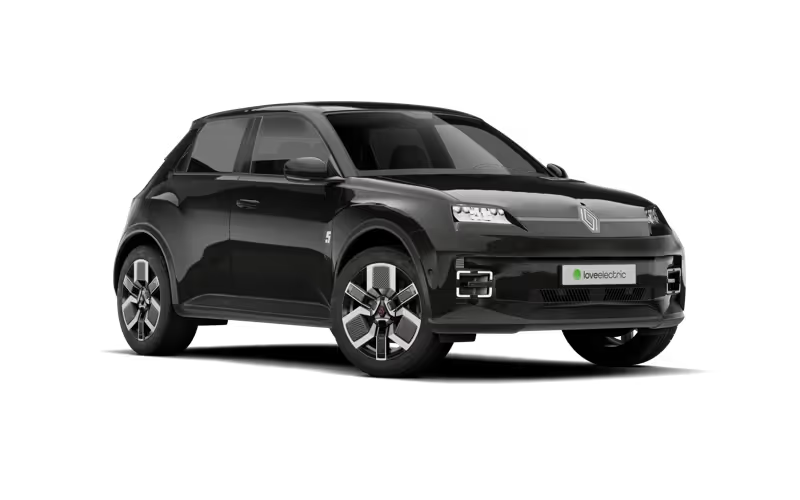
The Renault 5 E-Tech Electric is a smart option for businesses looking to offer a lower-cost electric company car that still feels modern, credible, and enjoyable to drive. While it’s more compact than most cars on this list, it delivers exactly what many company car drivers actually need: manageable size, sensible range, and low running costs.
Its small footprint makes it particularly well suited to urban roles, regional commuting, and employees who don’t need a large car for work. Inside, the Renault 5 feels thoughtfully designed and far more upmarket than you might expect at this price point, helping it avoid the “basic company car” label. For employers, it’s an effective way to make electric company cars accessible to a wider group of employees.
Price
From ~£22,995
Get a quote here to see what this car would cost on salary sacrifice at your tax bracket.
Key specifications
- Body style: Electric supermini / hatchback
- Seating: 5
- Range: Up to ~250 miles WLTP (battery dependent)
- Battery options: 40 kWh or 52 kWh
- Drivetrain: Front-wheel drive
- Charging: DC rapid charging up to ~100 kW (battery dependent)
- Warranty: 3 years / 60,000 miles (vehicle), with extended battery coverage
Our take
It works best for businesses that want to widen access to electric company cars, particularly for junior roles or city-based teams. If keeping costs down while still offering a desirable EV is the goal, the Renault 5 is a very strong choice for 2026.
Salary sacrifice: The best company car alternative
For a long time, getting a company car meant accepting a fixed shortlist, a fixed tax bill, and a car that was chosen more for policy than preference. It’s a good option if you genuinely need the car to do your job. But as a perk… there’s a better way.
Salary sacrifice gives employees more choice, clearer costs, and often a lower real monthly impact than a traditional company car. Instead of being allocated a vehicle, employees lease an EV through their employer using their gross salary, reducing Income Tax and National Insurance in the process.
For employers, it removes much of the complexity of running a company car scheme. For drivers, it often means access to newer, better-equipped electric cars that would otherwise feel out of reach.
And with loveelectric, you can get the EV of your dreams for a fraction of the cost when leasing on your own.

→ If you’re an employee, refer your company here.
→ If you’re responsible for benefits, see how loveelectric can replace or complement a traditional company car scheme.
Best electric company cars FAQs
What makes an electric car a good company car?
A good electric company car combines low Benefit-in-Kind (BIK) tax with real-world usability. That means enough range for commuting and business travel, fast and reliable charging, a professional look, and comfort for daily use. The best options also offer predictable running costs and are easy for employers to support at scale.
Are electric company cars cheaper than petrol or diesel company cars?
In most cases, yes. Electric company cars benefit from much lower BIK tax rates than petrol or diesel cars, which can significantly reduce the tax paid by the driver. When combined with lower running costs, EVs are often cheaper overall for both employees and employers.
Learn more: Electric Cars vs Petrol Cars: Costs Compared for UK Drivers
Which electric company car is best for high-mileage drivers?
For drivers covering a lot of motorway miles, range and charging speed matter most. Cars like the Tesla Model 3 or BMW i4 work well as company cars for high-mileage roles because they’re efficient at speed and capable of longer journeys with fewer charging stops.
How does Loveelectric fit into electric company cars?
loveelectric helps companies offer electric cars through salary sacrifice rather than running a traditional fleet. Employees get access to EVs with insurance, servicing, maintenance, tyres, and breakdown included in one monthly cost, while employers can offer a valuable benefit without fleet complexity.

Live monthly prices for popular electric SUVs


Illustrative prices for a 40% taxpayer on a £55,000 salary, 5,000 miles a year on a 48 month term, for the entry derivative of each model. Shows your estimated take home pay reduction; your own price and saving will vary. Prices update daily.