Best 7-Seater Electric Cars and SUVs in the UK | 2026 Guide


Finding the right seven-seater electric car means balancing space, range, charging speed and running costs. This comprehensive guide compares every 7-seater EV available in the UK, from affordable family haulers to luxury models, helping you choose the perfect vehicle for school runs, road trips and everything in between.
The seven-seater electric car market has transformed dramatically over the past two years. Where families once faced limited choice between expensive imports and compromised conversions, 2026 offers genuine variety across price points. New models like the Hyundai Ioniq 9 and Kia EV9 bring spacious, purpose-built electric SUVs to market, whilst established manufacturers expand their ranges with electric alternatives to traditional MPVs and large SUVs.
For UK families, the timing couldn't be better. Salary sacrifice schemes make even large seven-seaters surprisingly affordable through tax savings, with BiK rates remaining at just 4% for electric vehicles in 2026-27. Meanwhile, the UK's charging infrastructure continues expanding, with over 50,000 public charging points including 10,000+ rapid chargers according to Zap-Map data.
This guide examines every seven-seater electric car available to UK buyers in 2026, comparing real-world range, charging performance, third-row practicality, and total cost of ownership. Whether you need genuine seven-seat capability for regular use or occasional extra seating for grandparents and friends, we'll help you find the right electric seven-seater for your family.
What Makes a Great 7-Seater Electric Car?
Choosing a seven-seater electric car requires different considerations than a standard five-seater. The third row dramatically impacts vehicle dynamics, efficiency and practicality, making some specifications more critical than others.
Third-row usability varies dramatically between models claiming seven seats. Some vehicles offer genuine adult-friendly third rows with adequate legroom and headroom. Others provide third rows suitable only for children or occasional short journeys. The difference matters significantly if you regularly carry six or seven passengers versus needing occasional extra capacity for school pickups or short trips.
Key third-row considerations include:
- Seat width (can three children fit across comfortably?)
- Legroom with second row in typical position
- Headroom for teenagers and adults
- Access (how easy is it to climb into the third row?)
- ISOFIX points in third row
- Climate control vents for rear passengers
- Cup holders and USB charging points
Boot space with all seats occupied determines whether you can actually use all seven seats for family trips. Many seven-seaters offer 500+ litres with five seats but shrink to 200-300 litres with seven seats occupied. For weekend getaways or airport runs with luggage, this matters enormously.
Real-world range becomes more critical in larger, heavier vehicles. A seven-seater loaded with passengers and luggage will achieve 15-20% less range than the manufacturer's WLTP figure, particularly on motorways. We use real-world range data from the Electric Vehicle Database, which tests vehicles in standardised conditions providing more realistic expectations.
Charging speed matters more for family vehicles making longer journeys. A vehicle charging from 10-80% in 25 minutes versus 45 minutes transforms the family road trip experience. When travelling with children, minimising charging stops proves invaluable.
Running costs extend beyond the monthly payment. For families accessing seven-seaters through salary sacrifice, the 4% BiK rate creates substantial savings compared to diesel equivalents, which face BiK rates up to 37%. Insurance, maintenance and charging costs all contribute to total cost of ownership. Our Charge Card reduces public and home charging costs by up to 60%, making larger electric vehicles more economical.
Is a 7-seater electric SUV right for you?
If you're searching for a 7-seat family car, the chances are you want an SUV — not a people carrier. Most buyers in this category are looking for the raised driving position, the versatility of an SUV body, and something that doesn't look like a school-run shuttle. The 7-seat electric market has caught up with that expectation faster than almost any other segment, and the result is a category where electric now sets the standard.
There are purpose-built electric vehicles with full-size third rows, practical boot space with all seats in use, and enough range to cover a long weekend away without route-planning anxiety.
The cost case is stronger than most people expect. Because Benefit in Kind on electric cars is just 4% in 2026/27, a 40% taxpayer driving a 7-seat electric SUV through salary sacrifice pays a fraction of the BiK tax they'd pay on a petrol equivalent. In practice, the salary sacrifice monthly cost of a Kia EV9 through a scheme often lands within range of a petrol Ford Galaxy or Kia Sorento on a personal lease — with lower running costs on top. If you're considering a 7-seater and your employer offers salary sacrifice, the numbers are worth running before you rule electric out.
Best Affordable 7-Seater Electric Cars (Under £50,000)
Tesla Model Y (7-Seat Configuration) - £44,990
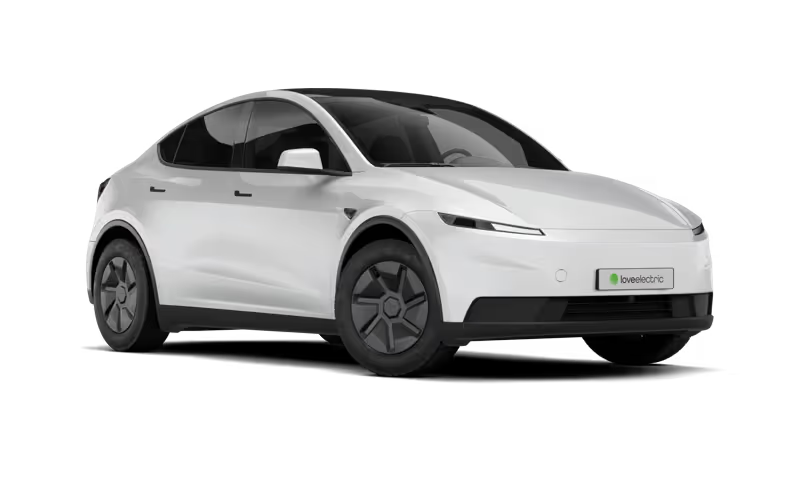
The Tesla Model Y seven-seater represents exceptional value in the seven-seat electric SUV segment. The third row adds £2,000 to the standard five-seat configuration, creating the UK's most affordable seven-seater electric car from a mainstream manufacturer. The Long Range variant delivers 331 miles WLTP range, though expect approximately 260 miles in real-world mixed driving according to Electric Vehicle Database testing.
Charging Performance The Model Y charges at up to 250 kW on Tesla's V3 Superchargers, though real-world charging typically peaks around 150-170 kW. This delivers 10-80% charging in approximately 27 minutes at capable chargers. Tesla's Supercharger network provides UK families with the most reliable rapid charging infrastructure, with chargers at most motorway services and major routes.
Third-Row Practicality The Model Y's third row suits children and smaller teenagers rather than adults. Access requires folding and sliding the second-row seats forward, which proves manageable for kids but awkward for adults. With the third row occupied, boot space reduces to approximately 363 litres - adequate for weekly shopping or school bags but limiting for longer trips with luggage.
Second-row legroom diminishes when the third row is occupied, as you'll need to slide seats forward to provide usable third-row space. For families with young children or occasional seven-seat needs, this works well. For regular seven-adult transport, consider larger alternatives.
Family-Friendly Features
- Two ISOFIX points in second row, none in third row
- Panoramic glass roof (can feel exposed for some children)
- Minimalist interior with 15-inch touchscreen controlling all functions
- Over-the-air software updates adding features
- Access to Tesla Supercharger network (210+ UK locations)
Monthly Cost on £55,000 Salary (Salary Sacrifice) | £416/month (with initial 3 month deposit, AB10 postcode, servicing, maintenance all included)
For an accurate quote, search our full range of cars here: get a quote.
Best For: Tech-focused families wanting the lowest seven-seater entry price, Tesla Supercharger network access, and who primarily need third-row seating for children.
Limitations: Third row unsuitable for adults on longer journeys. Minimalist interior lacks physical controls some families prefer. Build quality can vary between production batches.
Peugeot E-5008 - £48,550
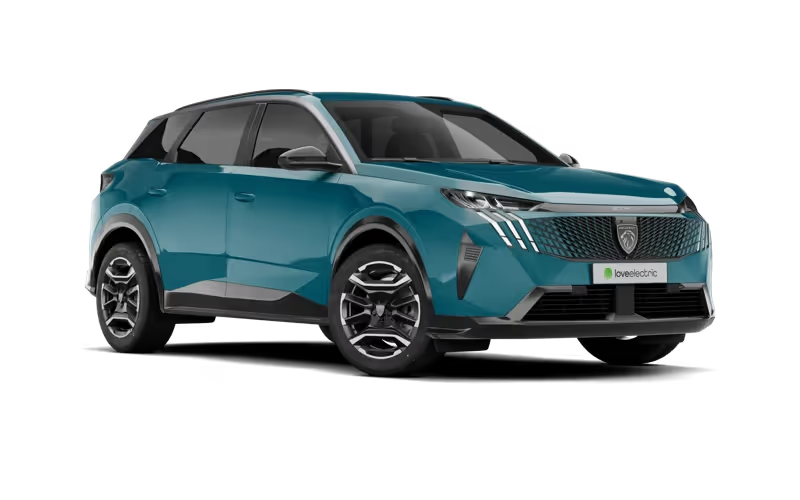
The Peugeot E-5008 brings French style and practicality to the seven-seater electric segment. Built on Stellantis' STLA Medium platform, the 98 kWh battery targets 415 miles WLTP range, though real-world figures suggest approximately 310-320 miles in mixed driving. This makes it one of the longest-range seven-seaters under £50,000.
Charging Performance Charging peaks at 160 kW, delivering 10-80% in approximately 30 minutes at capable chargers. Whilst not matching Korean rivals' charging speeds, it proves competitive for the segment and adequate for family road trips with strategic charging stop planning.
Third-Row Practicality The E-5008's third row is designed primarily for children, with limited legroom making adult use suitable only for shorter journeys. However, the seats fold flat into the boot floor when not needed, creating a completely flush loading area. Boot space with all seven seats occupied measures approximately 259 litres - enough for shopping bags and weekend essentials but requiring careful packing for longer trips.
Second-row seats slide independently, allowing you to balance second and third-row space according to passenger heights. This flexibility helps when carrying mixed-age passengers.
Family-Friendly Features
- Peugeot i-Cockpit with 21-inch curved panoramic display
- ISOFIX points across multiple seating positions
- Sliding and reclining second-row seats
- Flat-folding third row creating flexible boot space
- Panoramic glass roof with electric blind
Monthly Cost on £55,000 Salary (Salary Sacrifice) £483/month (with initial 3 month deposit, AB10 postcode, servicing, maintenance all included)
For an accurate quote, search our full range of cars here: get a quote.
Best For: Families prioritising maximum range in the affordable seven-seater segment, French design aesthetics, and who need third-row seating primarily for children.
Limitations: Third row cramped for adults. Boot space with seven seats occupied is modest. The i-Cockpit small steering wheel and high-mounted displays won't suit all drivers.
Best Mid-Range 7-Seater Electric Cars (£50,000-£75,000)
The Best Overall 7-Seater: Kia EV9 - £64,995
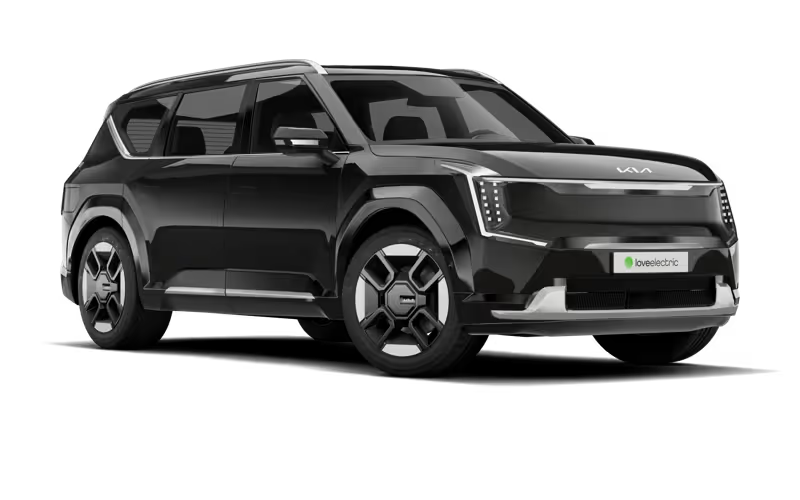
The Kia EV9 represents the gold standard for electric seven-seaters in 2026. Built on Kia's proven E-GMP 800V platform, it offers genuinely adult-friendly third-row seating, exceptional charging speeds, and comprehensive standard equipment. The 99.8 kWh battery delivers 349 miles WLTP range, with real-world testing suggesting approximately 270-280 miles in mixed driving according to Electric Vehicle Database data.
Why is the Kia EV9 the best 7-seater?
Not an SUV with an occasional fold-flat seat — a purpose-built 7-seater with full-size rear seats and up to 505 miles of WLTP range on the long-range rear-wheel-drive variant. It's the car that has defined this category.
Get a quote for the Kia EV9 with salary sacrifice.
Charging Performance The EV9's 800V architecture enables charging at up to 233 kW, delivering 10-80% in approximately 24 minutes. This represents one of the fastest-charging seven-seaters available at any price. For families making regular long-distance journeys, this transforms the road trip experience, with charging stops shorter than typical service station breaks.
Third-Row Practicality The EV9's third row offers genuine adult accommodation, with sufficient legroom and headroom for six-foot passengers on journeys up to 2-3 hours. The wide cabin and flat floor create a genuinely spacious feel. Accessing the third row requires sliding the second-row seats forward, but the wide door openings make this process easier than in most rivals.
Boot space with all seven seats occupied measures 333 litres - sufficient for several suitcases or a week's shopping. With the third row folded, this expands to 828 litres, and with all rear seats folded, you gain 2,393 litres of cargo space. This flexibility makes the EV9 genuinely versatile.
Family-Friendly Features
- ISOFIX points in all three rows (rare in seven-seaters)
- Sliding and reclining second-row seats
- Six or seven-seat configurations available
- Dual 12.3-inch displays with clear graphics
- Three-zone climate control with rear vents
- Vehicle-to-load capability (power external devices from the car)
- Kia's 7-year/100,000-mile warranty
- Relaxation seats in front (recline significantly when parked)
Monthly Cost on £55,000 Salary (Salary Sacrifice) £557/month (with initial 3 month deposit, AB10 postcode, servicing, maintenance all included)
For an accurate quote, search our full range of cars here: get a quote.
Best For: Families wanting adult-usable third-row seating, fastest charging speeds, comprehensive equipment, and manufacturer warranty peace of mind.
Limitations: The boxy exterior styling won't appeal to everyone. The ride quality can feel firm with larger wheels, particularly on broken UK roads.
Hyundai IONIQ 9 - £64,950
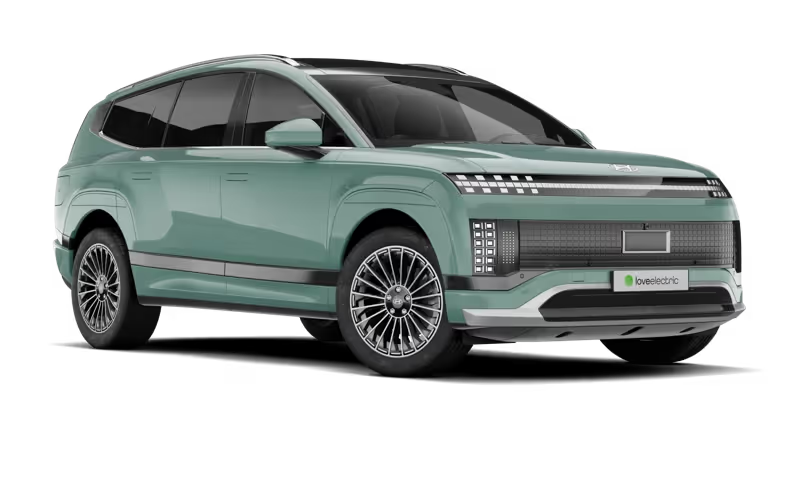
The Hyundai Ioniq 9 arrives in 2026 as Hyundai's flagship electric seven-seater, sharing the E-GMP 800V platform with its Kia EV9 sibling. The 110.3 kWh battery (larger than the EV9's) delivers 385 miles WLTP range, with real-world testing suggesting approximately 300 miles in mixed driving. This makes it the longest-range electric seven-seater under £75,000.
Charging Performance Like the EV9, the Ioniq 9 utilises 800V architecture for rapid charging at up to 350 kW peak power (though more typically 230-250 kW in real-world conditions). This delivers 10-80% charging in approximately 24 minutes at capable chargers, matching the EV9's exceptional charging performance.
Third-Row Practicality The Ioniq 9 offers adult-friendly third-row accommodation similar to the EV9, with generous headroom thanks to the tall roofline. The longer wheelbase compared to the EV9 provides slightly more third-row legroom. Boot space with all seven seats occupied measures approximately 310 litres, expanding to approximately 980 litres with the third row folded.
The Ioniq 9's 'Lounge Mode' allows both front and second-row seats to recline significantly (when parked), creating a relaxation space for picnics or charging breaks - a feature particularly appreciated by families on long journeys.
Family-Friendly Features
- ISOFIX points in all three seating rows
- Swivelling second-row seats (specific trim levels)
- Digital side mirrors reducing blind spots
- Curved dual 12.3-inch displays
- Universal Island console (slides between front seats)
- Vehicle-to-load capability up to 3.6 kW
- Hyundai's 5-year unlimited mileage warranty
Monthly Cost on £55,000 Salary (Salary Sacrifice) £541/month (with initial 3 month deposit, AB10 postcode, servicing, maintenance all included)
For an accurate quote, search our full range of cars here: get a quote.
Best For: Families wanting maximum range in the seven-seater segment, latest technology features, innovative interior design, and who make regular long-distance journeys.
Limitations: The distinctive styling won't suit conservative tastes. Swivelling seats and digital mirrors require adjustment for some drivers. UK deliveries began late 2025, so long-term reliability data remains limited.
Volkswagen ID. Buzz (7-Seat Configuration) - £59,545
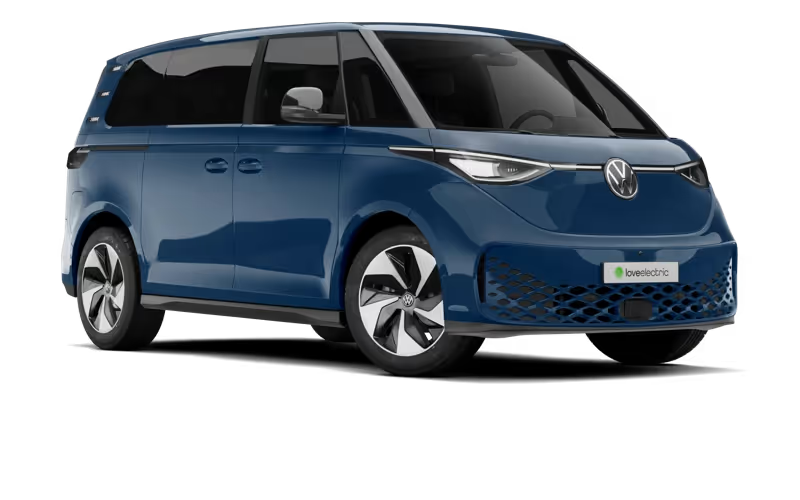
The Volkswagen ID. Buzz brings retro-inspired MPV practicality to the electric seven-seater market. The long-wheelbase version delivers 338 miles WLTP range from its 86 kWh battery, with real-world testing suggesting approximately 260 miles in mixed driving according to Electric Vehicle Database data.
Charging Performance The ID. Buzz charges at up to 200 kW, delivering 10-80% in approximately 30 minutes at capable chargers. Whilst not matching Korean rivals' charging speeds, it proves adequate for family road trips, and the MPV format makes charging stops more comfortable than SUV alternatives.
Third-Row Practicality The ID. Buzz's third row is designed for children and smaller teenagers rather than adults. The MPV layout provides excellent headroom throughout the cabin, but third-row legroom is limited when the second row is in a comfortable position. Boot space with all seven seats occupied measures 306 litres, expanding to 1,121 litres with the third row folded and 2,469 litres with all rear seats folded.
What distinguishes the ID. Buzz is accessibility. Sliding rear doors on both sides make third-row access significantly easier than traditional SUV doors, particularly valuable in tight parking spaces or when loading children. The high roofline means adults don't need to crouch when moving through the cabin.
Family-Friendly Features
- Sliding rear doors both sides (rare in electric vehicles)
- ISOFIX points in second and third rows
- Tall roofline creating airy cabin feel
- Removable second-row seats (individual captain's chairs on some trims)
- Multiple storage compartments throughout cabin
- Two-tone colour schemes celebrating heritage styling
- Optional panoramic glass roof
Monthly Cost on £55,000 Salary (Salary Sacrifice) £540/month (with initial 3 month deposit, AB10 postcode, servicing, maintenance all included)
For an accurate quote, search our full range of cars here: get a quote.
Best For: Families wanting MPV practicality with sliding doors, distinctive retro styling, Volkswagen brand reputation, and who primarily need third-row seating for children.
Limitations: Third row cramped for adults. Retro styling divisive (you'll love it or hate it). The tall body creates more wind noise at motorway speeds than lower SUVs.
Mercedes EQB - £59,925
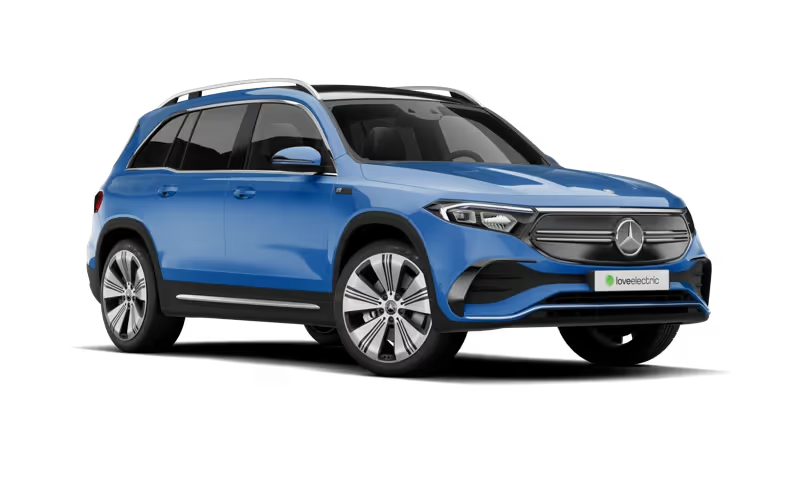
The Mercedes EQB brings three-pointed star luxury to the compact seven-seater segment. The 66.5 kWh battery delivers 257 miles WLTP range, with real-world testing suggesting approximately 200 miles in mixed driving according to Electric Vehicle Database data. This makes it one of the shorter-range seven-seaters, though adequate for daily family use with regular charging.
Charging Performance The EQB charges at up to 112 kW, delivering 10-80% in approximately 32 minutes. Whilst not class-leading, it proves adequate for occasional longer journeys. The modest battery size means full charges don't take excessively long even at slower chargers.
Third-Row Practicality The EQB's third row is strictly for children, with very limited legroom making adult use impractical even for short journeys. The compact external dimensions (the EQB is significantly smaller than the EV9 or Ioniq 9) mean the third row represents emergency seating rather than regular use. Boot space with all seven seats occupied measures just 190 litres - enough for handbags and small bags but little else.
However, the EQB's compact size brings advantages in urban environments. It's easier to park and manoeuvre than larger seven-seaters, making it practical for school runs in congested areas where larger SUVs feel cumbersome.
Family-Friendly Features
- Mercedes MBUX infotainment with 10.25-inch displays
- ISOFIX points in second row (not third row)
- Mercedes build quality and materials throughout
- Augmented reality navigation (specific trims)
- Seven airbags as standard
- Mercedes-Benz User Experience voice control
- Electric tailgate for easier loading
Monthly Cost on £55,000 Salary (Salary Sacrifice) £410/month (with initial 3 month deposit, AB10 postcode, servicing, maintenance all included)
For an accurate quote, search our full range of cars here: get a quote.
Best For: Urban families wanting premium Mercedes badge and quality in a compact package, who need occasional seven-seat capability primarily for short journeys with children.
Limitations: Shortest range in this comparison. Third row unsuitable for adults or longer journeys. Boot space very limited with seven seats occupied. The compact dimensions mean it feels small compared to purpose-built seven-seaters.
Best Luxury 7-Seater Electric Cars (£75,000+)
Volvo EX90 - £96,255
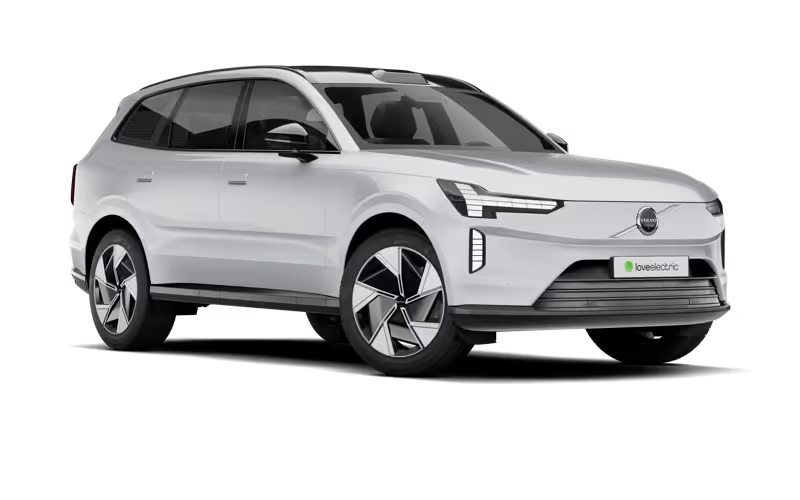
The Volvo EX90 represents the pinnacle of Scandinavian luxury in the electric seven-seater segment. Built on Volvo's new SPA2 platform, the 111 kWh battery delivers 374 miles WLTP range, with real-world testing suggesting approximately 290 miles in mixed driving according to Electric Vehicle Database data.
Charging Performance The EX90 charges at up to 250 kW, delivering 10-80% in approximately 30 minutes at capable chargers. Volvo has optimised charging curves to maintain higher speeds deeper into the charging session, making real-world charging times competitive with faster-peak-power rivals.
Third-Row Practicality The EX90 offers genuinely adult-usable third-row seating, with sufficient legroom and headroom for adults on journeys up to 3-4 hours. The width of the cabin means three adults can sit across the middle row comfortably. Boot space with all seven seats occupied measures 310 litres, expanding to 655 litres with the third row folded and 1,915 litres with all rear seats folded.
Second-row seats slide significantly, allowing you to prioritise either second or third-row space. For families with teenagers, you can create generous legroom in both rows - something few seven-seaters achieve.
Family-Friendly Features
- ISOFIX points in all three seating rows
- Industry-leading safety technology (Volvo's heritage)
- Lidar sensor for advanced driver assistance
- Bowers & Wilkins premium audio system (optional)
- Sustainable interior materials throughout
- Scandinavian minimalist design aesthetic
- Volvo On Call connected services
- Wireless phone charging front and rear
- Panoramic glass roof with electrochromic dimming
Monthly Cost on £55,000 Salary (Salary Sacrifice) £625/month (with initial 3 month deposit, AB10 postcode, servicing, maintenance all included)
For an accurate quote, search our full range of cars here: get a quote.
Best For: Families prioritising safety credentials, sustainable luxury, adult-usable third-row seating, and who value Scandinavian design philosophy over German alternatives.
Limitations: The substantial price premium over mid-range alternatives. The minimalist interior, whilst beautiful, lacks the ornate luxury some buyers expect at this price. Third-row access requires sliding second-row seats forward, which can feel cumbersome.
Mercedes EQS SUV - £112,480
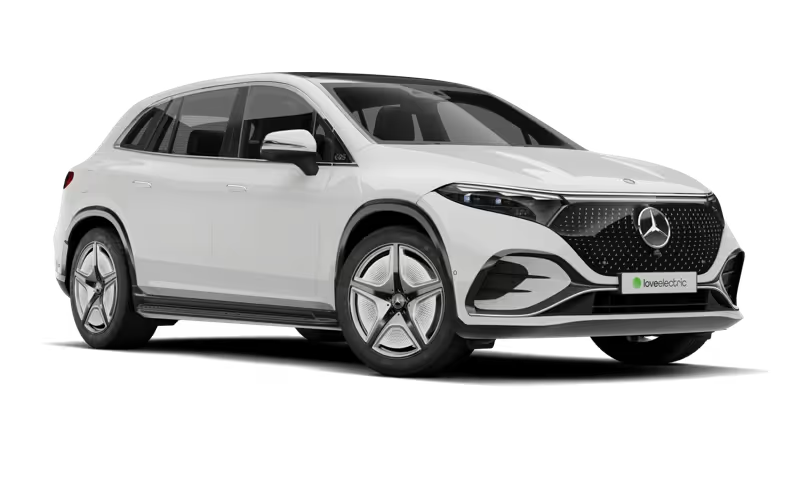
The Mercedes EQS SUV brings S-Class luxury to the electric seven-seater segment. The 118 kWh battery delivers 399 miles WLTP range, with real-world testing suggesting approximately 310 miles in mixed driving according to Electric Vehicle Database data. This makes it one of the longest-range luxury seven-seaters available.
Charging Performance The EQS SUV charges at up to 200 kW, delivering 10-80% in approximately 31 minutes at capable chargers. Mercedes' battery management optimises charging speeds in various temperature conditions, maintaining consistent performance even in cold weather when many EVs slow significantly.
Third-Row Practicality The EQS SUV's third row is designed for children and smaller teenagers rather than adults. The focus on luxury and refinement in the first two rows means the third row represents occasional-use seating. Boot space with all seven seats occupied measures approximately 195 litres - limiting for longer trips with luggage.
However, the EQS SUV's party piece is second-row luxury. With the third row folded (five-seat configuration), rear passengers enjoy limousine-like space and comfort, with optional executive rear seating providing massage functions and extensive adjustment.
Family-Friendly Features
- MBUX Hyperscreen (56-inch curved glass housing three displays)
- ISOFIX points in second and third rows
- Burmester 3D surround sound system
- Air suspension with adaptive damping
- Rear-axle steering (reducing turning circle significantly)
- HEPA air filtration system
- Energising Comfort Control (combines climate, lighting, and massage)
- Augmented reality navigation
- Wireless charging front and rear
Monthly Cost on £55,000 Salary (Salary Sacrifice) £990/month (with initial 3 month deposit, AB10 postcode, servicing, maintenance all included)
For an accurate quote, search our full range of cars here: get a quote.
Best For: Luxury-focused families who prioritise first and second-row refinement above third-row practicality, want flagship Mercedes technology, and primarily use seven-seat capability occasionally.
Limitations: Six-figure pricing puts it beyond most family budgets even with salary sacrifice savings. Third row unsuitable for adults. The MBUX Hyperscreen, whilst impressive, can be overwhelming with functionality buried in menus.
BMW iX (xDrive40 and above) - £85,405
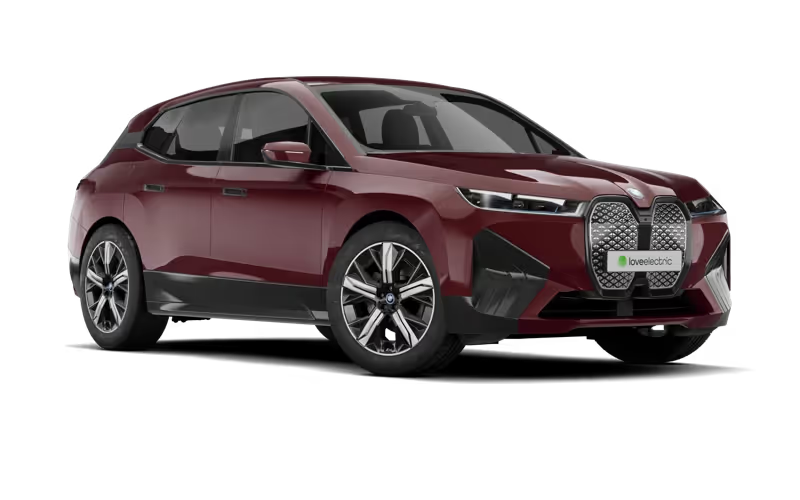
The BMW iX doesn't offer a factory seven-seat option in the UK, but it deserves mention as many families cross-shop it against seven-seaters. The 111.5 kWh battery delivers 372 miles WLTP range, with real-world testing suggesting approximately 290 miles in mixed driving according to Electric Vehicle Database data.
Why Consider a Five-Seater Alternative? For families who rarely use all seven seats, the iX offers several advantages: significantly more boot space (500 litres vs 300 litres typical in seven-seaters with all seats up), lower weight improving efficiency and handling, and greater second-row luxury than seven-seaters prioritising third-row space.
Monthly Cost on £55,000 Salary (Salary Sacrifice) £558/month (with initial 3 month deposit, AB10 postcode, servicing, maintenance all included)
For an accurate quote, search our full range of cars here: get a quote.
Best For: Families who occasionally need seven seats and prefer hiring larger vehicles for rare occasions, prioritising daily practicality and driving dynamics over seating flexibility.
Upcoming 7-Seater Electric Cars in 2026
Range Rover Electric (7-Seat Option Expected)
Land Rover's first pure electric vehicle arrives in late 2026, and industry sources suggest a seven-seat configuration will be offered. The dedicated EV platform uses 800V architecture targeting 400+ miles range. Pricing hasn't been confirmed but expect £100,000+ for the seven-seat variant.
Expected Arrival: Late 2026
Anticipated Price: £100,000+
Why It Matters: Brings Land Rover luxury and off-road capability credentials to the electric seven-seater segment, appealing to families who need countryside capability alongside school-run practicality.
7-Seater Electric Cars vs Diesel Alternatives
The transition from diesel seven-seaters to electric alternatives delivers substantial financial benefits for UK families, particularly through salary sacrifice schemes.
Benefit-in-Kind Tax Comparison
For company car drivers and salary sacrifice users, BiK tax creates the most significant difference:
2026-27 BiK Rates:
- Electric vehicles: 4% of P11D value
- Diesel vehicles: 34-37% of P11D value (depending on emissions)
For a £60,000 vehicle on a £55,000 salary (40% tax bracket):
- Electric: £960 annual BiK tax (£80/month)
- Diesel equivalent: £8,160-£8,880 annual BiK tax (£680-£740/month)
This £600+ monthly saving makes electric seven-seaters dramatically more affordable than diesel equivalents through salary sacrifice, even before considering running cost savings.
Fuel Cost Comparison
Real-world energy costs create further savings:
Electric charging costs (mixed home and public):
- Home charging: 7-9p per kWh (overnight tariffs)
- Public rapid charging: 44-85p per kWh (our Charge Card reduces this up to 60%)
- Average mixed use: approximately 15-20p per mile
Diesel fuel costs:
- Average diesel price: £1.48 per litre (December 2025, RAC data)
- Large SUV/MPV consumption: 35-40 mpg typical
- Cost per mile: approximately 17-19p per mile
For families covering 12,000 miles annually:
- Electric: £1,800-£2,400 annual energy cost
- Diesel: £2,040-£2,280 annual fuel cost
However, electric vehicles also eliminate urea (AdBlue) costs required by modern diesel vehicles, adding further savings.
Maintenance Cost Comparison
Electric vehicles deliver 30-40% lower maintenance costs according to data from the AA and RAC:
Electric vehicle servicing typically includes:
- Brake fluid check/replacement (every 2 years)
- Cabin air filter replacement
- Tyre rotation and inspection
- Battery and electrical system checks
- Annual cost: £150-250
Diesel vehicle servicing typically includes:
- Oil and filter changes
- AdBlue top-ups
- Diesel particulate filter maintenance
- EGR valve cleaning (common issue)
- Timing belt replacement (major service interval)
- Annual cost: £400-600
For families using salary sacrifice, maintenance costs are included in the monthly payment, simplifying budgeting and eliminating unexpected repair bills.
Choosing the Right 7-Seater Electric Car for Your Family
Selecting the perfect seven-seater electric car requires honest assessment of your actual needs rather than aspirational specifications. Here's how to navigate the decision:
Assess Third-Row Usage Realistically
Daily users (school runs, commuting with colleagues): Prioritise adult-usable third rows with genuine comfort:
- Kia EV9
- Hyundai Ioniq 9
- Volvo EX90
Weekly users (grandparent visits, friend pickups): Child-friendly third rows prove adequate:
- Tesla Model Y
- Volkswagen ID. Buzz
- Peugeot E-5008
Monthly users (occasional extra capacity): Emergency seating acceptable:
- Mercedes EQB
Match Range to Journey Patterns
Primarily urban and suburban (under 100 miles daily): Any seven-seater provides ample range:
- Mercedes EQB (257 miles WLTP adequate)
- Tesla Model Y (331 miles WLTP generous margin)
Regular longer journeys (150+ miles weekly): Prioritise range and charging speed:
- Hyundai Ioniq 9 (385 miles WLTP, 350 kW charging)
- Kia EV9 (349 miles WLTP, 233 kW charging)
- Volvo EX90 (374 miles WLTP, 250 kW charging)
Frequent long-distance (200+ miles multiple times weekly): Maximum range and charging speed essential:
- Hyundai Ioniq 9 (longest range, fastest charging)
- Mercedes EQS SUV (399 miles WLTP)
Consider Boot Space Requirements
With all seven seats occupied:
- Kia EV9: 333 litres (class-leading)
- Hyundai Ioniq 9: 310 litres (excellent)
- Volkswagen ID. Buzz: 306 litres (very good)
- Volvo EX90: 310 litres (very good)
- Peugeot E-5008: 259 litres (adequate)
- Mercedes EQB: 190 litres (limiting)
For families making weekend trips or airport runs with luggage, prioritise 300+ litres with all seats occupied.
With five seats (third row folded):
- Kia EV9: 828 litres
- Hyundai Ioniq 9: 980 litres
- Volkswagen ID. Buzz: 1,121 litres
- Mercedes EQB: 495 litres
Budget Beyond the Monthly Payment
Home charging installation costs:
- Standard 7 kW charger: £800-1,200 installed
- OZEV grant available (conditions apply): £350 off installation
Our EV charging solutions include discounted installation
Public charging costs: Our Charge Card reduces public charging costs by up to 60%, making rapid charging affordable for families without home charging or on longer journeys.
Insurance premiums: Electric seven-seaters typically cost 10-20% more to insure than diesel equivalents due to higher vehicle values and specialist repairs. However, through salary sacrifice, insurance is included in your monthly payment at competitive rates negotiated through fleet purchasing power.
Test Drive Critical Factors
Third-row access: Actually climb into the third row yourself. Can you do this easily? Will elderly grandparents manage?
Visibility: Check over-shoulder visibility for parking and changing lanes. Larger seven-seaters have significant blind spots.
Interior noise: Road noise and wind noise vary significantly between models. Test at motorway speeds if possible.
Control layout: Can you adjust climate, navigation and media without taking eyes off the road? Some touchscreen-heavy systems prove distracting.
Seat comfort: Spend 20+ minutes in each seating position. Back support, thigh support, and adjustability all matter on longer journeys.
7-Seater Electric Cars and Salary Sacrifice
Accessing a seven-seater electric car through salary sacrifice delivers 30-60% savings compared to personal purchase or lease. Understanding how this works helps you maximise benefits:
How Salary Sacrifice Creates Savings
You agree to reduce your gross salary in exchange for a company car. Because this reduction happens before tax and National Insurance calculations, you save:
Income tax savings:
- 30-60% depending on your income - typically the more you earn, the more you can save on Income Tax.
National Insurance savings:
- 12% (or 2% above upper threshold) employee contributions avoided
Employer National Insurance savings:
- 15% employer contributions avoided (often passed to employee)
Benefit-in-Kind tax:
- Only 4% of P11D value for electric vehicles (2026-27)
- Rising to 5% in 2027-28
- Compare to 34-37% for diesel equivalents
For an accurate quote, search our full range of cars here: get a quote.
Zero Risk Guarantee Protection
Our Zero Risk Guarantee addresses the primary concern with salary sacrifice: what happens if you change jobs or need to end your lease early?
Traditional salary sacrifice schemes charge substantial early termination fees (often £5,000-10,000 for premium or larger vehicles). Our guarantee ensures you're never out of pocket, with your employer guaranteed support from Day 1. This removes a significant barrier preventing families from accessing electric seven-seaters through salary sacrifice.
Check Your Eligibility
Use our eligibility checker to see if your employer participates in salary sacrifice schemes. If not, our employee referral programme helps you encourage your HR team to introduce the benefit.
Frequently Asked Questions
Which 7-seater electric car has the longest range?
The Hyundai Ioniq 9 offers the longest range among electric seven-seaters available in the UK, with 385 miles WLTP from its 110.3 kWh battery. Real-world range in mixed driving conditions is approximately 300 miles according to Electric Vehicle Database testing.
The Mercedes EQS SUV comes close at 399 miles WLTP (approximately 310 miles real-world), whilst the Volvo EX90 delivers 374 miles WLTP (approximately 290 miles real-world). However, it's worth noting that WLTP figures represent laboratory conditions at optimal temperatures. Real-world range decreases by 15-20% in mixed driving and 25-30% in winter motorway conditions.
For most families, any vehicle offering 300+ miles WLTP (240+ miles real-world) provides adequate range for daily use with weekly charging. Prioritising charging speed often matters more than absolute range for longer journeys, as a vehicle charging in 20 minutes versus 40 minutes transforms the road trip experience.
Are 7-seater electric cars suitable for long journeys?
Modern seven-seater electric cars are genuinely suitable for long journeys, provided you choose models with appropriate range and charging capabilities. The UK's charging infrastructure has expanded dramatically, with rapid chargers (50 kW+) at most motorway services and major routes.
Key factors for long-journey suitability:
Adequate real-world range: Vehicles offering 250+ miles real-world range allow 2-3 hour driving stints between charges, matching typical comfort-break intervals for families with children.
Rapid charging capability: Vehicles charging at 200+ kW can reach 80% charge in 20-30 minutes, making charging stops comparable to service station breaks. The Kia EV9 and Hyundai Ioniq 9's 800V architecture enables even faster charging (10-80% in ~24 minutes).
Route planning tools: Modern electric cars include navigation systems that automatically plan charging stops based on your destination, current charge level, and charger availability. Apps like Zap-Map provide real-time charger availability and pricing.
Charging costs: Public rapid charging costs 44-85p per kWh at most networks. Our Charge Card reduces this by up to 60%, making long journeys more economical.
For families regularly making 300+ mile journeys, test your intended route using apps like A Better Route Planner or Zap-Map to understand realistic charging stop requirements.
How much boot space do you lose with the third row up?
Boot space reduction with third row raised varies dramatically between models:
Minimal impact (300+ litres):
- Kia EV9: 333 litres (best-in-class)
- Hyundai Ioniq 9: 310 litres
- Volvo EX90: 310 litres
- Volkswagen ID. Buzz: 306 litres
Moderate impact (250-300 litres):
- Peugeot E-5008: 259 litres
Significant impact (under 200 litres):
- Mercedes EQB: 190 litres
- Mercedes EQS SUV: 195 litres
- Tesla Model Y: 363 litres (boot only, excluding frunk)
For context, 300 litres accommodates approximately 3-4 medium suitcases or a week's shopping. Below 200 litres becomes limiting for anything beyond school bags and handbags.
If you regularly use all seven seats with luggage, prioritise models offering 300+ litres with third row raised. Alternatively, consider roof boxes or bars for occasional longer trips, though these impact aerodynamic efficiency and range.
Can adults sit comfortably in the third row?
Third-row adult accommodation varies enormously between models claiming seven seats:
Genuinely adult-friendly (regular 2-3 hour journey use):
- Kia EV9: Wide cabin, generous legroom, adequate headroom for 6-foot passengers
- Hyundai Ioniq 9: Similar to EV9, slightly more legroom thanks to longer wheelbase
- Volvo EX90: Adult-usable third row with good headroom
Occasional adult use (journeys under 1 hour):
- Volkswagen ID. Buzz: Good headroom, limited legroom when second row in comfortable position
- Peugeot E-5008: Tight legroom, better suited to teenagers than adults
Children only (adults highly uncomfortable):
- Tesla Model Y: Very cramped legroom, low roof height
- Mercedes EQB: Minimal legroom, strictly emergency seating
- Mercedes EQS SUV: Designed for children despite luxury positioning
If you regularly carry six or seven adults, test the third row yourself before committing. Bring typical passengers at actual heights to assess realistic comfort. Remember that second-row passengers often need to slide seats forward to create third-row legroom, reducing their comfort.
What are ISOFIX points and why do they matter?
ISOFIX points are standardised attachment points for child car seats, providing a secure, foolproof connection that eliminates installation errors. They matter significantly for families with young children, as properly installed child seats reduce injury risk by approximately 70% compared to incorrectly fitted seats according to RoSPA data.
ISOFIX requirements by age:
- Infants (0-15 months): Rear-facing i-Size or Group 0+ with ISOFIX base
- Toddlers (15 months - 4 years): Forward or rear-facing Group 1 with ISOFIX
- Children (4-12 years): High-back booster with ISOFIX or without (belt-secured)
ISOFIX availability in seven-seaters:
Most electric seven-seaters provide ISOFIX points in the second row (typically two outer seats). Third-row ISOFIX availability varies:
ISOFIX in all three rows:
- Kia EV9 (rare feature, highly valuable)
- Hyundai Ioniq 9
- Volvo EX90
ISOFIX in second row only:
- Tesla Model Y
- Volkswagen ID. Buzz
- Mercedes EQB
- Mercedes EQS SUV
- Peugeot E-5008
If you need to carry multiple young children requiring ISOFIX seats, prioritise models offering ISOFIX in all three rows or ensure you can accommodate all ISOFIX seats in the second row.
How much cheaper is salary sacrifice compared to personal lease?
Salary sacrifice typically delivers 30-60% savings compared to personal leasing the same vehicle, depending on your tax bracket. The savings come from three sources:
Tax and National Insurance savings:
- Basic rate (20% tax): 32% saving (20% income tax + 12% employee NI)
- Higher rate (40% tax): 52% saving (40% income tax + 12% employee NI)
- Additional rate (45% tax): 57% saving (45% income tax + 12% employee NI)
Low BiK tax rate: Electric vehicles face just 4% BiK tax (2026-27), compared to the tax you'd pay on salary used for personal lease.
Included benefits: Salary sacrifice packages typically include insurance, maintenance, tyres and breakdown cover. Personal leases require separate arrangement of these, often at higher individual retail prices
Use our salary sacrifice calculator to see specific savings for your salary and chosen vehicle.
What happens if I change jobs during my lease?
Changing jobs during a salary sacrifice lease has historically created complications, with employees facing substantial early termination fees (often £5,000-10,000 for premium vehicles). This concern prevents many families from accessing electric cars through salary sacrifice.
Our Zero Risk Guarantee addresses this concern directly. If you change jobs, retire, go on maternity/paternity leave, or face any circumstance requiring early termination, you'll be able to return your vehicle with only a minimal early termination fee. Your employer has support from Day 1, and you won't face unexpected costs.
The specific process depends on your circumstances and timing. However, the key principle is simple: you won't be financially penalised for life changes beyond your control.
This protection makes salary sacrifice suitable even for employees considering career moves, as you're not locked into an unaffordable commitment.
Do I need a home charger?
You don't strictly need a home charger to own an electric seven-seater, but it transforms the ownership experience and reduces running costs dramatically.
With home charging:
- Overnight electricity tariffs: 7-9p per kWh
- Cost per mile: approximately 3-4p
- Convenience: leave home fully charged every morning
- Annual cost (12,000 miles): £360-480
Without home charging (public rapid charging):
- Public rapid rates: 44-85p per kWh (our Charge Card reduces this up to 60%)
- Cost per mile: approximately 15-20p without Charge Card, 8-12p with it
- Convenience: requires planning charging stops
- Annual cost (12,000 miles): £1,800-£2,400 without Charge Card, £960-£1,440 with it
Home charger installation costs:
- Standard 7 kW charger: £800-1,200 installed
- OZEV grant: £350 off installation (eligibility criteria apply)
- Smart chargers: £900-£1,400 installed (schedule charging for cheapest rates)
For families covering 8,000+ miles annually, home charging pays for itself within 1-2 years through reduced electricity costs. Our EV charging solutions include discounted installation and smart chargers integrating with renewable energy tariffs.
If you cannot install a home charger (flat, apartment, on-street parking), prioritise vehicles with rapid charging capability (200+ kW) to minimise public charging time, and ensure reliable chargers exist near your regular parking location.
How reliable are electric seven-seaters?
Electric seven-seaters prove more reliable than diesel equivalents due to dramatically simpler powertrains. Electric motors have approximately 20 moving parts compared to 2,000+ in combustion engines, eliminating common failure points like timing belts, clutches, EGR valves, and DPF systems.
Manufacturer warranty coverage:
- Kia: 7 years/100,000 miles (industry-leading)
- Hyundai: 5 years/unlimited mileage
- Volvo: 3 years/60,000 miles (battery: 8 years/100,000 miles)
- Mercedes: 3 years/unlimited mileage (battery: 8 years/100,000 miles)
- Tesla: 4 years/50,000 miles (battery and drivetrain: 8 years/120,000 miles)
- Volkswagen: 3 years/60,000 miles (battery: 8 years/100,000 miles)
Common maintenance items:
- Tyre rotation and replacement (every 20,000-30,000 miles)
- Brake fluid replacement (every 2 years)
- Cabin air filter (annually)
- Wiper blades (as needed)
- 12V battery replacement (every 3-5 years)
Items that don't need maintenance:
- No oil changes
- No timing belts
- No clutch replacement
- No gearbox servicing
- No exhaust system repairs
- No DPF cleaning
Annual maintenance costs for electric vehicles typically run £150-250 compared to £400-600 for diesel equivalents. Through salary sacrifice, maintenance is included in your monthly payment.
Battery degradation represents the primary long-term concern, but modern EV batteries typically retain 85-90% capacity after 100,000 miles according to data from Tesla, Nissan and other manufacturers with vehicles approaching 10 years old.
Conclusion: Finding Your Perfect Electric 7-Seater
The electric seven-seater market in 2026 offers genuine choice for UK families across every budget and requirement. From the affordable practicality of the Tesla Model Y to the luxury refinement of the Volvo EX90, there's an electric seven-seater suited to your family's specific needs.
For budget-conscious families, the Tesla Model Y delivers exceptional value at £44,990 with genuine seven-seat capability (for children), excellent efficiency, and access to the Supercharger network. The Peugeot E-5008's impressive range makes it ideal for families prioritising maximum miles per charge.
For those seeking the best overall package, the Kia EV9 stands out with adult-usable third-row seating, fastest-in-class charging speeds (10-80% in ~24 minutes), and comprehensive standard equipment backed by Kia's industry-leading 7-year/100,000-mile warranty. The Hyundai Ioniq 9 offers similar capabilities with slightly longer range and innovative features like swivelling seats.
For luxury-focused families, the Volvo EX90 brings Scandinavian refinement, industry-leading safety technology, and genuinely spacious three-row accommodation. The Mercedes EQS SUV prioritises first and second-row luxury above third-row practicality, making it ideal for families who occasionally need seven seats but prioritise limousine-like comfort most of the time.
For MPV practicality, the Volkswagen ID. Buzz's sliding doors and tall roofline create easier access than traditional SUVs, particularly valuable in tight parking spaces or when loading young children.
Whichever you choose, accessing your electric seven-seater through salary sacrifice delivers 30-60% savings compared to personal purchase or lease. The combination of tax advantages (4% BiK rate vs 34-37% for diesel), included insurance and maintenance, and our Charge Card reducing charging costs makes even six-figure luxury seven-seaters surprisingly accessible.
The infrastructure concerns that once limited electric vehicle adoption have largely disappeared. Over 50,000 UK charging points, including 10,000+ rapid chargers, mean long journeys are straightforward with modern planning tools. Vehicles offering 250+ miles real-world range and 200+ kW charging speeds make family road trips genuinely practical.
Browse our range of electric seven-seaters to get a quote and see exactly what your monthly cost would be through salary sacrifice. Our Zero Risk Guarantee ensures you're never penalised for life changes, making salary sacrifice suitable even for employees considering career moves.
The electric seven-seater transition isn't coming - it's here, affordable, and genuinely practical for UK families in 2026.

.avif)