Best Electric SUVs of 2026: UK's Top Models Compared

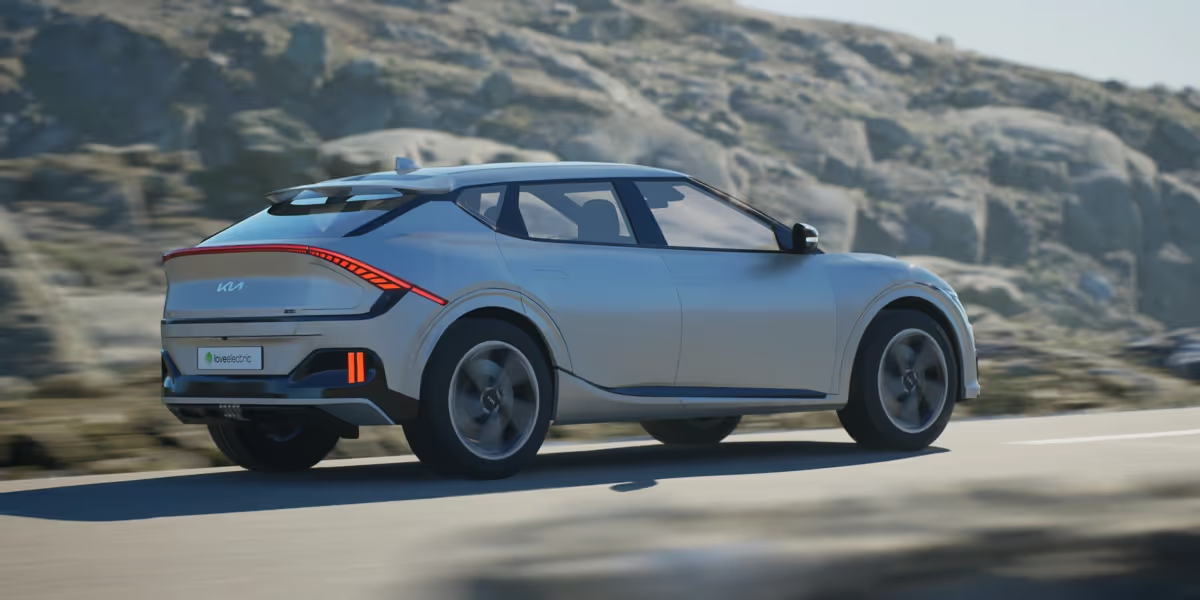
What this guide covers: The best electric SUVs on sale in the UK as of May 2026, ranked by budget tier. We also share our top staff picks, offering our honest opinions on vehicles we've actually driven and own. We compare WLTP range, DC charging speeds, boot space and monthly cost through a salary sacrifice car scheme. All prices are correct at time of publication. Last updated: September 2026.
Quick comparison: the best electric SUVs in the UK 2026
The table below covers our top picks across all three budget tiers. Scheme pricing is shown for a 40% taxpayer on a 48-month contract, 5,000 miles per annum, with a £55,000 gross salary and maximum deposit selected.
| Model | Starting price | WLTP range | Monthly cost via salary sacrifice | Best for |
|---|---|---|---|---|
| Vauxhall Frontera Electric | £22,495 (incl. PiCG) | 189 miles | £215/month | Cheapest entry point |
| Renault 4 E-Tech | ~£23,445 | 245 miles | £241/month | Best affordable pick |
| MG S5 EV | £28,995 | 211 miles | £253/month | Best for space |
| Tesla Model Y | £41,990 | 332 miles | £374/month | Best all-rounder |
| Skoda Enyaq | £42,810 | 364 miles | £402/month | Biggest boot under £50,000 |
| Volkswagen ID.4 | from £36,995 (Pure) | 238–333 miles (varies by variant) | £359/month | VW badge, shared MEB platform with Enyaq |
| Ford Mustang Mach-E | £52,390 | 373 miles | £411/month | Most affordable premium pick |
| Kia EV9 | £66,645 | 349 miles | £629/month | Best for families (7 seats, towing) |
| Porsche Macan Electric | £68,500 | 398 miles | £719/month | Most desirable driver's car |
| BMW iX3 (Neue Klasse) | £58,755 (xDrive50) | 421–500 miles | £560/month | Premium range leader |
The best electric SUVs in the UK right now
As of May 2026, the UK's electric SUV market is more competitive than at any point previously. Models that were difficult to recommend two years ago, whether for range, charging speed, or price, have been significantly improved. The Renault 4 E-Tech has brought a proper electric SUV under £25,000; the BMW iX3 on BMW's Neue Klasse platform is now available to order with 421–500 miles of WLTP range; and the Kia EV9 remains the benchmark for families needing seven seats and real-world towing.
Our picks are structured by budget. For the vast majority of UK drivers, the question is not which electric SUV has the longest possible range — it is which gives the best combination of real-world usability, charging convenience, and monthly cost. For employees with access to a salary sacrifice scheme, that monthly cost can be 30–40% lower than an equivalent personal lease. To understand how salary sacrifice works, see our full explainer.
Remember, you can get a monthly quote for any vehicle - search cars here.
What Makes a Great Electric SUV in 2026?
Not all electric SUVs are created equal. After years of development, the market has matured beyond just range anxiety. Here's what separates the exceptional from the merely adequate:
Real-world range matters more than WLTP figures. A car claiming 300 miles might only achieve 240 miles in winter motorway driving. Throughout this guide, we use real-world range data from the Electric Vehicle Database, which tests vehicles in controlled conditions at 23°C and in mixed driving conditions. This gives you a realistic expectation of what you'll actually achieve.
Charging speed has become crucial as the public charging network expands. A vehicle that charges from 10-80% in 25 minutes versus 45 minutes makes a tangible difference on longer journeys. We've included maximum charging speeds and realistic charging times for each model.
Practicality means different things to different drivers. Boot space, rear legroom, towing capacity, and even the size of the front boot (frunk) all contribute to whether an SUV will actually suit your lifestyle. We've highlighted practical considerations for each vehicle.
Running costs extend beyond electricity prices. For company car drivers and those using salary sacrifice schemes, the low BiK rate (4% for 2026-27) make EVs significantly cheaper than petrol or diesel equivalents. Our Charge Card can save you up to 60% on both home and public charging costs, further reducing running expenses.
Technology and safety have become standard rather than premium features. Most electric SUVs now include advanced driver assistance systems, over-the-air updates, and smartphone integration as standard.
loveelectric's Staff Picks & Reviews of the Best Electric SUVs
As one of the UK's leading EV salary sacrifice providers, we know a thing or two about electric cars. Whilst our comprehensive list covers the specs, pricing and best picks from each price range - we've also shared our opinions on some of our favourite electric SUVs below:
Changan Deepal S07 | "Feels very premium - punches above its RRP"
Our Marketing Manager - Joel - recently had the chance to take the Deepal S07 for a test-drive. It's been one of our most popular special offers to date, so seeing it in the metal for the first time was great.
He praised the luxurious interior, which is a standout feature; especially for the price point.
There's also a huge amount of storage and cubby space. This may not sound like a big deal, but with EVs having increasingly minimalist interiors, having lots of space to put belongings is becoming rare.
"Very lovely interior and very nice to drive"
Watch the test drive below:
@loveelectric.cars POV: you're about to drive one of our most popular special offers 🚗⚡ The Changan Deepal S07 is a fully electric SUV with 218hp, rear-wheel drive, and a WLTP range to match its premium feel. Heads-up display, large touchscreen, wood-effect trim, and a £39,990 RRP that honestly doesn't match how it drives. Get yours through salary sacrifice for around £282/month, everything including! 👉🏻 link in bio #changan #deepal #ev #electriccar #Cartok ♬ Vlog - wouldliker
Volvo EX60 | "In person, it is something else"
One of our resident EV Experts - Ben - was invited to Volvo to do a walkaround of their latest mid-level SUV: the Volvo EX60.
He praised the luxurious interior, which is a standout feature; especially for the price point.
There's also a huge amount of storage and cubby space. This may not sound like a big deal, but with EVs having increasingly minimalist interiors, having lots of space to put belongings is becoming rare.
"Very lovely interior and very nice to drive"
Watch the walkaround video below:
@loveelectric.cars Volvo's new EX60 just walked so every other electric SUV has to run. 503 miles of range. An 18-minute charge. A tardis boot. We need to talk about this car. And yes, you can get this through a salary sacrifice scheme. Search cars and get your personal quote via the link in our bio. Would you daily drive it? 👇 #Volvo #EX60 #EV #ElectricCar #CarTok ♬ Aesthetic - BoominBeats
Kia EV6 | "Feels like you're in a spa"
Our Product Manager - Steph - leases a used Kia EV6 through the scheme. As a Scottish resident, being able to preheat the cabin and defrosting the car from inside the house is a major plus for her.
Yes, the Kia EV6 has great boot space. It's genuinely one of the best electric vehicles to drive. There's plenty going for it.
But Steph's favourite feature? The ambient nature sounds and heated seats.
"It's very relaxing. I often get tempted to just turn the heated seats on, come out by myself, put the spa music on and just relax in the car"
Watch Steph's verdict below:
@loveelectric.cars Steph LOVES her used Kia EV6‘s pre-heated cabin and the added bonus of surround sound nature ambience to compliment the complete silence of EV life. Check out loveelectric‘s full range of new and used EV‘s in our bio #ev #kia #ev6 #usedev #electriccar ♬ Natural Forest Sounds - John Story
Best Electric SUVs Under £35,000
Below £35,000, salary sacrifice brings several of these models within reach of a monthly cost comparable to a mid-range petrol lease — without the fuel and servicing overhead. For affordable electric cars more broadly, see our dedicated guide.
Renault 4 E-Tech - our top pick under £35,000
Available from £241/month | Get a quote
Renault 4 E-Tech — key specs
- Starting price: ~£23,445
- WLTP range: 245 miles
- DC charging: 100kW peak
- Boot space: 420 litres
- Monthly via salary sacrifice: £241/month
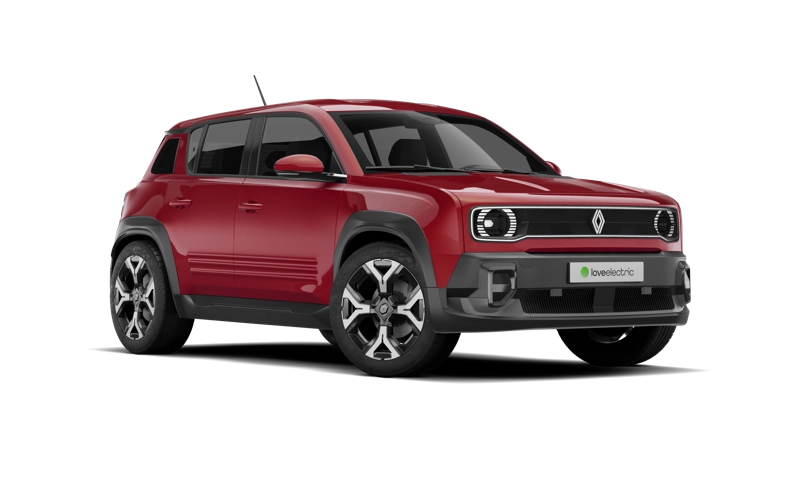
The Renault 4 E-Tech is the most convincing all-round electric SUV under £25,000 to arrive in the UK market. It combines a properly useful 245 miles of WLTP range with a 100kW DC charging capability - enough for a 10–80% charge in approximately 30 minutes - and a 420-litre boot that is genuinely family-practical. The interior is well-built by the standards of this price tier, with physical controls for climate and audio that many buyers will find more intuitive than rival all-touchscreen setups.
The Renault 4 makes a strong case on total cost of ownership. Running costs are lower than equivalent petrol models: home charging at an overnight tariff of around 7–9p/kWh costs a fraction of petrol pence-per-mile (Source: Guide to home charging costs). For buyers with access to a salary sacrifice scheme, this is the most accessible way into a properly specified electric SUV.
Vauxhall Frontera Electric - cheapest entry point
Available from £215/month | Get a quote
Vauxhall Frontera Electric — key specs
- Starting price: £22,495 (incl. Plug-in Car Grant)
- WLTP range: 189 miles
- DC charging speed: 100kW
- Boot space: 460 litres
- Monthly via salary sacrifice: £215/month
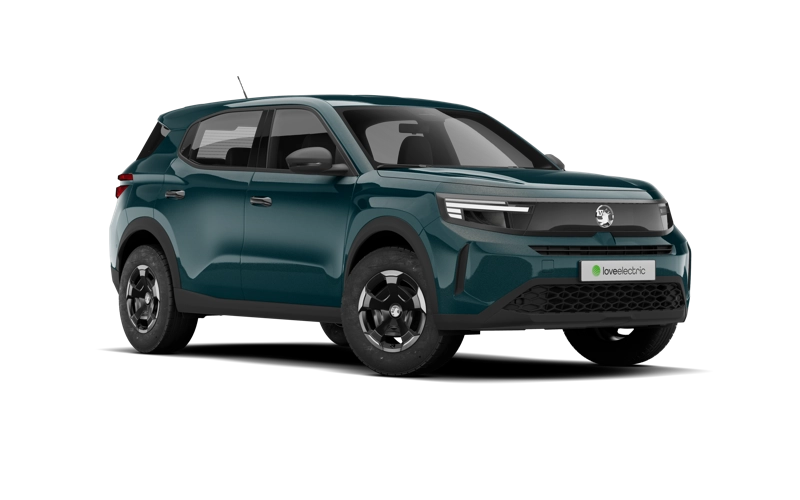
The Vauxhall Frontera Electric holds the lowest list price of any electric SUV currently on sale in the UK, from £22,495 after the Plug-in Car Grant. The trade-off is range: at 189 miles WLTP, it is the shortest-range model on this list and is best suited to drivers with a predictable commute and reliable access to home or workplace charging. For urban and suburban use, 189 miles is adequate for the vast majority of weekly driving — the average UK driver covers fewer than 150 miles per week (Source: Department for Transport — National Travel Survey 2024).
Where the Frontera earns its place is simplicity and affordability. It is an honest, practical crossover without unnecessary complexity. Buyers who prioritise a lower monthly outlay over maximum range will find it a compelling entry point.
MG S5 EV
Available from £253/month | Get a quote
MG S5 EV — key specs
- Starting price: £28,995
- WLTP range: 211 miles
- DC charging: 120kW
- Boot space: 453 litres
- Monthly via salary sacrifice: £253/month
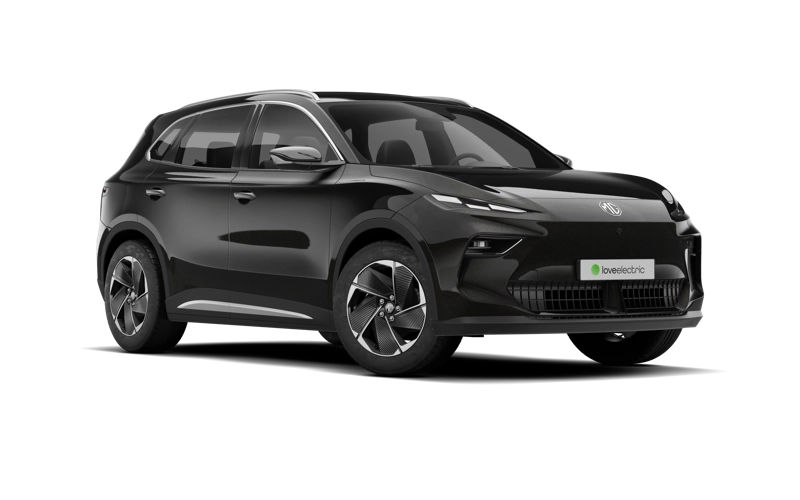
The MG S5 EV is MG's all-new electric SUV that replaces the ZS EV with significantly improved technology and driving dynamics. Built on the same Modular Scalable Platform as the award-winning MG4, the 64 kWh battery delivers 298 miles WLTP range (225 miles real-world, according to the Electric Vehicle Database). For families wanting to make the switch to electric without stretching the budget, it represents exceptional value.
Charging peaks at 139 kW DC, meaning a 10-80% charge takes approximately 28 minutes. This addresses the previous ZS EV's charging weakness and matches many rivals costing significantly more. The 453-litre boot is genuinely practical, and rear passenger space is generous with comfortable seating for adults. The adjustable boot floor provides up to 1,441 litres with rear seats folded.
Standard equipment includes a 12.8-inch HD touchscreen with wireless Apple CarPlay and Android Auto, a 10.25-inch digital driver display, and MG's comprehensive MG Pilot driver assistance suite. The interior represents MG's best effort yet, with soft-touch materials throughout and a more premium feel than previous MG models. The rear-wheel-drive setup (unlike the front-drive ZS EV) delivers more engaging driving dynamics.
Best Mid-Range Electric SUVs (£35,000-£50,000)
Tesla Model Y - Our top pick
From £374/month | Get a quote
Tesla Model Y — key specs
- Starting price: £41,990
- WLTP range: 332 miles
- DC charging: 250kW (Supercharger V3); 10–80% in ~27 minutes
- Boot space: 854 litres + 117-litre frunk
- 7-seat option: Yes (available on Long Range trim)
- Monthly via salary sacrifice: £374/month
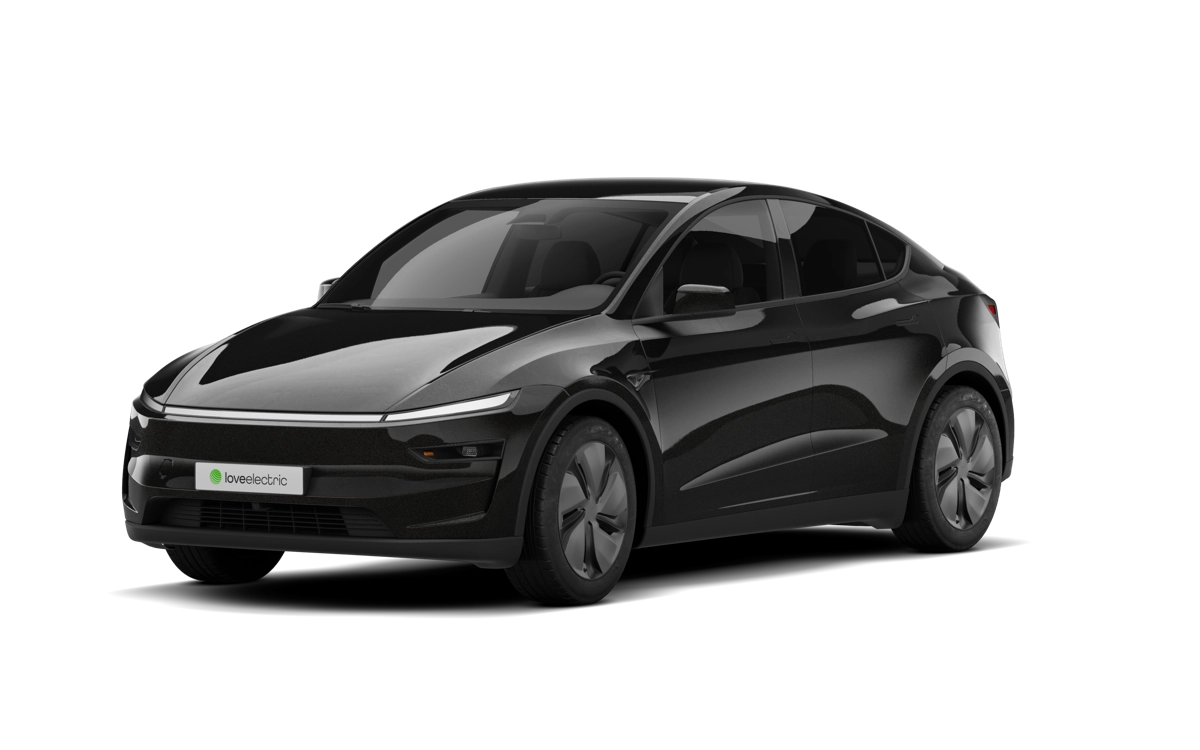
The Tesla Model Y remains the benchmark against which other electric SUVs are measured. It delivers 332 miles WLTP range or 235 miles in real-world conditions according to the Electric Vehicle Database. The Model Y's efficiency and Tesla's Supercharger network give it a significant advantage for long-distance driving.
Charging peaks at 250 kW on V3 Superchargers, though more typically you'll see 150-170 kW, delivering 10-80% in approximately 27 minutes. The 854-litre boot (with a further 117 litres up front) makes it one of the most practical electric SUVs available. Seven-seat versions are available, though the third row suits children rather than adults.
Tesla's minimalist interior divides opinion. Everything is controlled through the 15-inch central touchscreen, including the glovebox and steering wheel adjustment. Over-the-air updates continuously add features, and the Autopilot driver assistance system (standard) is amongst the most capable available. Build quality has improved significantly from earlier Model Y production.
Best for: Technology enthusiasts, frequent long-distance drivers, and those who prioritise efficiency and the Supercharger network over traditional luxury.
Limitation: Interior quality and design lag behind traditional premium manufacturers, and some drivers find the all-screen interface too minimalist.
Skoda Enyaq - a smart alternative
From £402/month | Get a quote
Skoda Enyaq — key specs
- Starting price: £42,810
- WLTP range: 364 miles
- DC charging: 135kW; 10–80% in ~36 minutes
- Boot space: 585 litres
- Monthly via salary sacrifice: £402/month
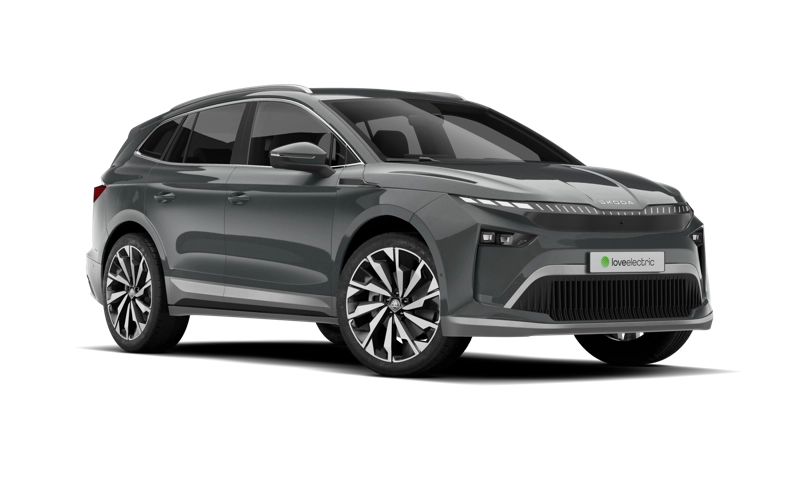
The Skoda Enyaq is the practical choice for buyers who want maximum interior space without the premium associated with German badges. Its 585-litre boot is the largest of any model under £50,000 in this guide — 69 litres more than the Model Y — and its cabin is quieter, more traditionally laid out, and arguably better finished with physical controls where they matter. The Enyaq shares Volkswagen Group's MEB electric platform with the VW ID.4, meaning the underlying engineering is well-proven across a high volume of vehicles.
Where the Enyaq cedes ground is charging speed: 135kW DC peak versus the Model Y's 250kW means longer stops on a long-distance journey. For the majority of drivers who charge primarily at home and use rapid charging occasionally, this is unlikely to be a material constraint.
Volkswagen ID.4 - Pick of the MEB platform
From £359/month | Get a quote
Volkswagen ID.4 — key specs
- Starting price: £36,995 (Pure entry-level, 52kWh)
- WLTP range: 238 miles (Pure)
- DC charging: 135kW
- Boot space: 543 litres
- Monthly via salary sacrifice: £359/month
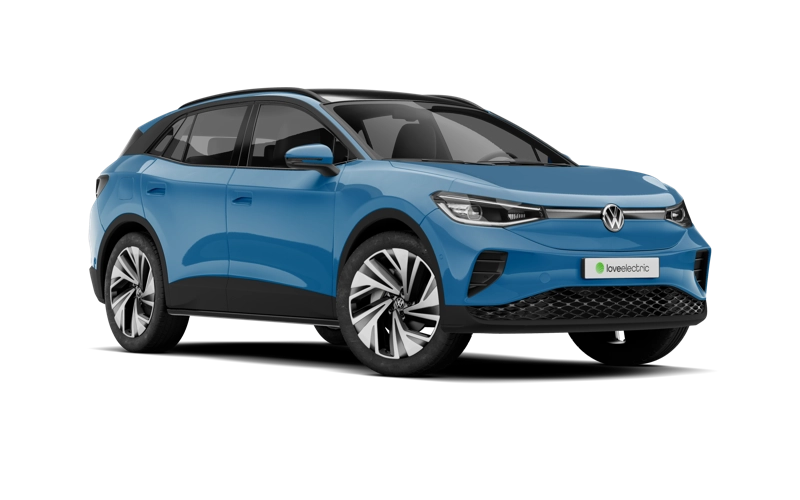
The Volkswagen ID.4 shares its platform, battery, and charging architecture with the Skoda Enyaq but carries the VW badge and a slightly more refined interior finish. It starts from £36,995 for the entry-level Pure trim (52kWh, 238 miles WLTP) — making it the lowest-priced way into the VW Group MEB platform. For buyers who want the full range capability, the recommended Pro variant (77kWh) delivers approximately 333 miles of WLTP range at a higher price point [verify Pro variant pricing before publishing].
The ID.4's 543-litre boot is practical, though smaller than the Enyaq's 585 litres. Buyers choosing between the two are essentially choosing between the VW badge — and its marginally more refined interior — and the Enyaq's extra boot capacity. Both share the same 135kW DC charging architecture.
Best Luxury Electric SUVs (£50,000 - £70,000)
The salary sacrifice argument is strongest at this price tier for higher-rate taxpayers. At 4% BiK (2026/27), the monthly tax charge on a £65,000 electric car is approximately £217/month for a 40% taxpayer — compared to roughly £2,000/month for an equivalent petrol model at 37% BiK. The net monthly scheme cost, inclusive of insurance and maintenance, is often lower than a basic-rate personal lease.
Ford Mustang Mach-E - Most affordable in this tier
From £411/month | Get a quote
Ford Mustang Mach-E — key specs
- Starting price: £52,390
- WLTP range: 373 miles
- DC charging: 150kW peak; 10–80% in ~38 minutes
- Boot space: 402 litres + 100-litre frunk
- Monthly via salary sacrifice: £411/month
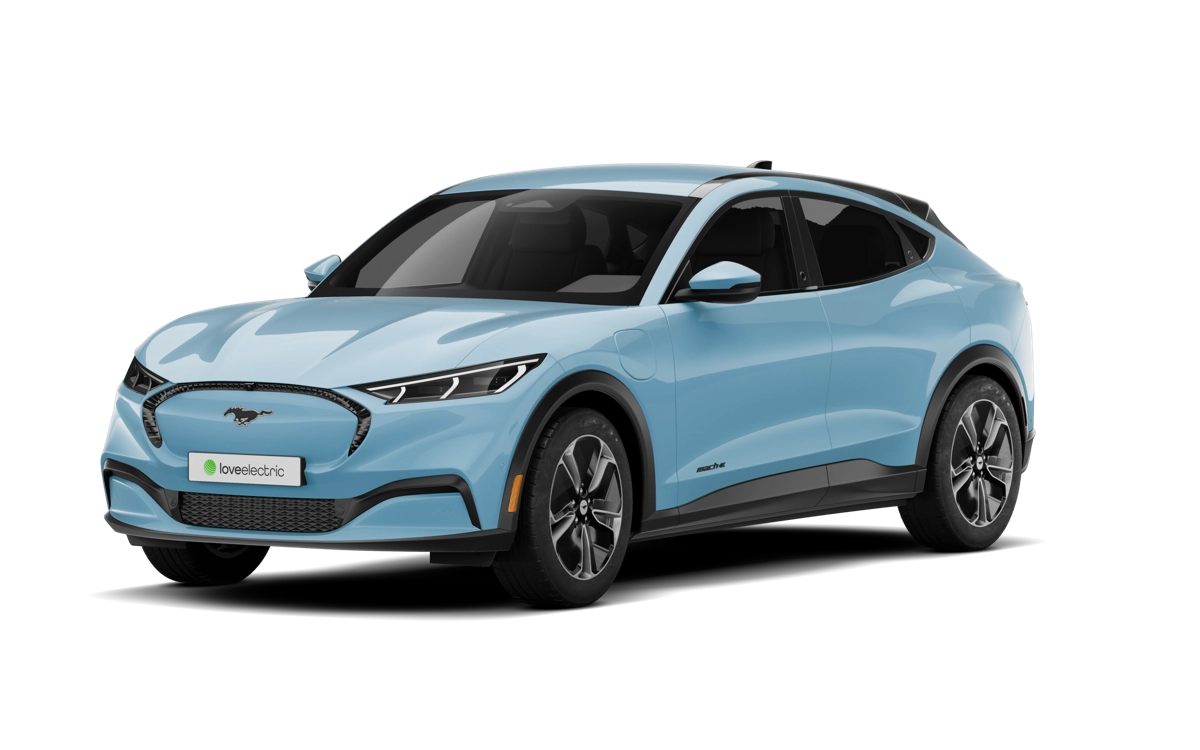
At £52,390, the Ford Mustang Mach-E is the most affordable model in this budget tier and one of the most accessible ways into a long-range electric SUV through a salary sacrifice arrangement. Its 373 miles of WLTP range — the highest stated figure of any model under £55,000 in this guide — is a strong headline number. The 402-litre boot is modest for this size of vehicle, though a 100-litre frunk provides useful additional storage.
The Mach-E's 150kW DC charging speed is slower than the 800V competitors in this tier, but the associated dealer network and Ford's established UK service infrastructure provide practical ownership reassurance. For drivers prioritising monthly cost over peak charging performance, the Mach-E is the standout value proposition in the £50,000–£70,000 bracket.
Porsche Macan Electric - Most desirable
From £719/month | Get a quote
Porsche Macan Electric — key specs
- Starting price: £68,800
- WLTP range: 398 miles
- DC charging: 800V; 270kW peak; 10–80% in ~21 minutes
- Boot space: 540 litres + 84-litre frunk
- Monthly via salary sacrifice: £719/month
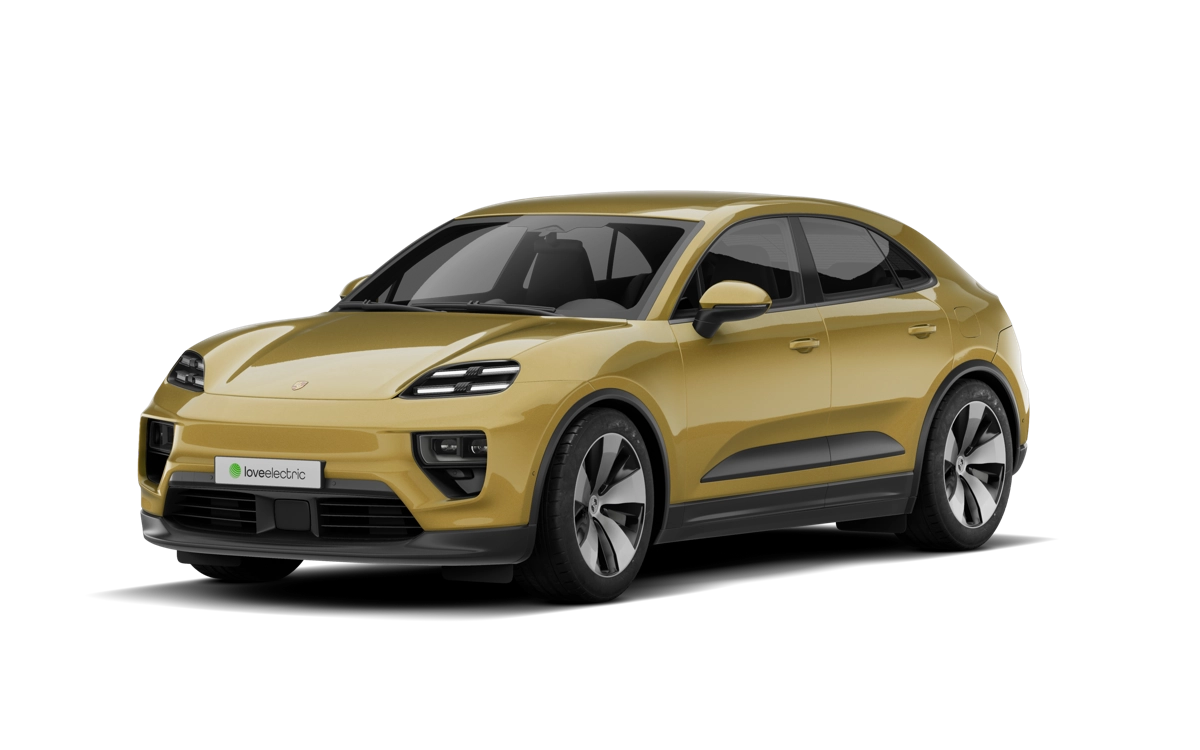
The Porsche Macan Electric is the most driver-focused electric SUV in this guide — and, for many buyers, the most desirable. Built on Volkswagen Group's Premium Platform Electric (PPE) architecture, it shares the Taycan's 800V charging technology (270kW peak DC; 10–80% in approximately 21 minutes) in a more accessible, daily-usable package. WLTP range is 398 miles; independent real-world testing puts actual range at approximately 305 miles in mixed conditions.
What sets the Macan apart is its handling. Porsche's engineers have tuned the steering, suspension, and power delivery with a precision that no other electric SUV at this price point matches. Adaptive air suspension is standard, composure at motorway speeds is exceptional, and the driving experience remains engaging in a way that purely practical rivals do not attempt. For drivers who need a family-sized electric SUV and refuse to sacrifice involvement, the Macan is the clear recommendation.
BMW iX3 - £75,305
From £560/month | Get a quote
BMW iX3 (Neue Klasse) — key specs
- Starting price: £58,755 (xDrive50)
- WLTP range: 421–500 miles (depending on specification)
- DC charging: 800V architecture
- Boot space: 520 litres
- Monthly via salary sacrifice: £560/month
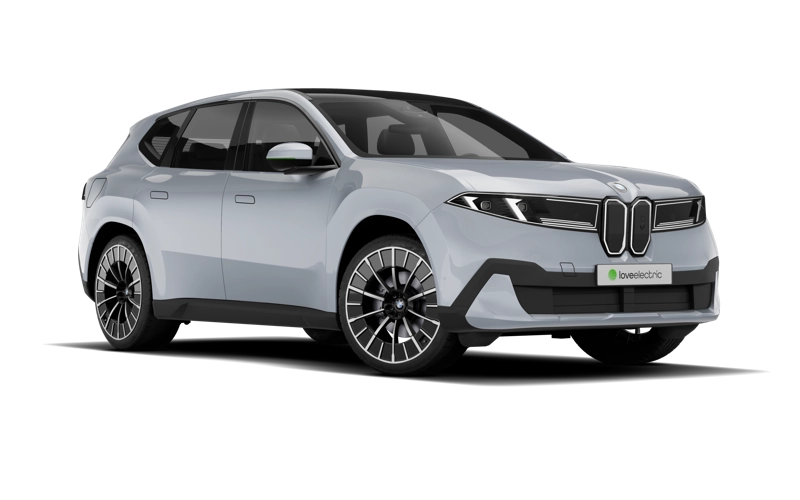
The BMW iX3 on the Neue Klasse platform is a substantively different vehicle from its predecessor. BMW's new-generation EV architecture delivers 421–500 miles of WLTP range depending on specification — the longest of any model in this guide — alongside 800V charging architecture for significantly faster DC charging than previous-generation premium electric SUVs. It is available to order now through the Love Electric scheme, with monthly costs available via the scheme inventory.
The iX3 carries BMW's typical dynamic character — the handling and ride balance are more considered than most electric SUVs of this size. For buyers who want genuine premium feel, a recognisable luxury badge, and the longest available real-world range in a usable family package, the Neue Klasse iX3 is the rational choice at this tier.
Kia EV9 - Best for families
From £629/month | Get a quote
Kia EV9 Air — key specs
- Starting price: £66,645 (Air trim)
- WLTP range: 349 miles (RWD) / 313 miles (AWD)
- DC charging: 800V architecture; 10–80% in 24 minutes
- Battery: 99.8kWh
- Boot space: 333 litres (7 seats) / 828 litres (3rd row folded)
- Towing: 2,500kg braked (AWD) / 900kg braked (RWD)
- 7 seats: Standard across all trims
- Monthly via salary sacrifice: £629/month
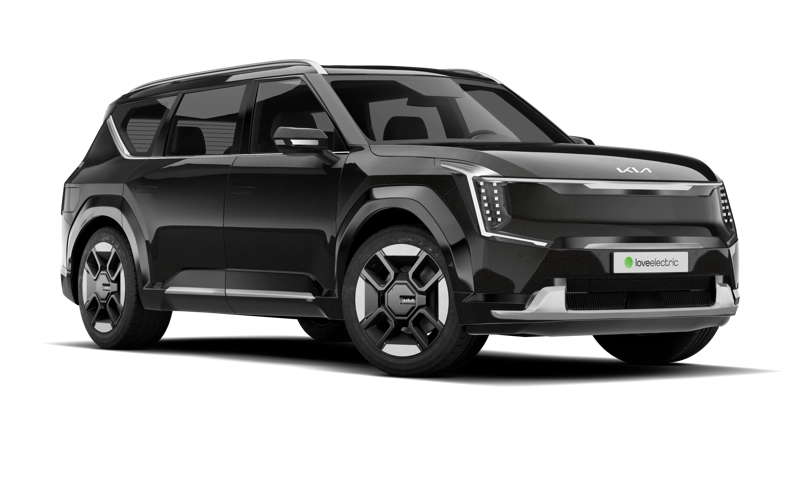
The Kia EV9 is the benchmark family electric SUV of 2026. Seven seats are standard across all trims. AWD variants tow up to 2,500kg (braked) — enough for a caravan or a horse trailer — while the 99.8kWh battery delivers 349 miles of WLTP range in rear-wheel-drive configuration (313 miles for AWD) (Source: Kia UK, May 2026). The 800V architecture means a 10–80% charge in 24 minutes on a compatible rapid charger, which meaningfully reduces the dwell time on family road trips.
The EV9 is not the most dynamically engaging car in this tier. It is large, deliberately so, and prioritises passenger comfort and practicality over driver involvement. That is the correct trade-off for the buyers it is aimed at. The 7-year, 150,000-mile warranty exceeds most rivals and provides long-term ownership confidence.
Most Anticipated Electric SUVs Coming in 2026
Range Rover Electric
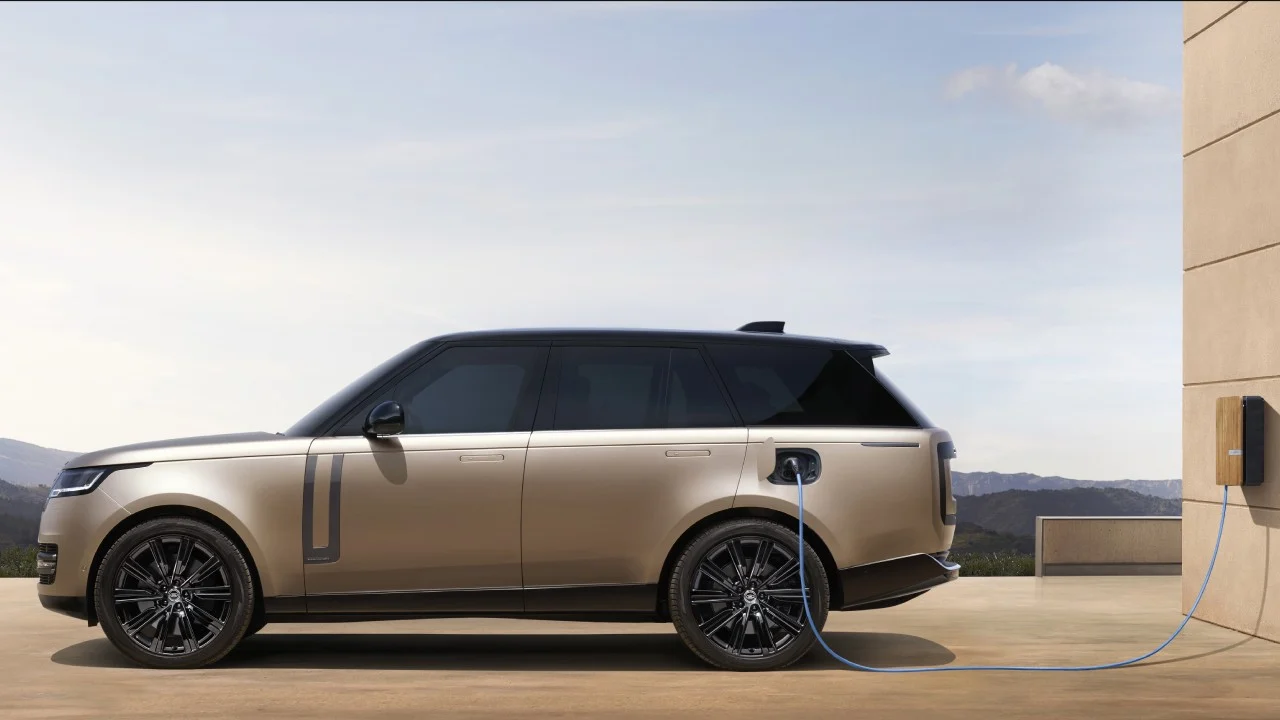
Land Rover's first pure electric vehicle represents one of the most significant launches of 2026. Expected to arrive in UK dealerships from autumn 2026, the Range Rover Electric aims to combine the brand's legendary luxury and capability with zero-emission driving.
Based on official announcements from Land Rover, the Range Rover Electric will use a dedicated EV platform rather than adapting existing architecture. The battery capacity hasn't been officially confirmed, but industry sources suggest over 100 kWh, targeting a range exceeding 300 miles. Land Rover has confirmed 800V architecture enabling rapid charging, with 10-80% expected in under 30 minutes.
What makes this particularly significant is Land Rover's promise to maintain the Range Rover's off-road capability. The electric drivetrain's instant torque delivery could actually enhance low-speed rock crawling and precise throttle control in challenging terrain. Air suspension will be standard, and the interior will showcase Range Rover's signature blend of modern technology and traditional luxury.
Pricing hasn't been officially announced, but expect the Range Rover Electric to start around £100,000, positioning it against the BMW iX and Mercedes EQS SUV. For those considering salary sacrifice, the 4% BIK rate makes even six-figure electric vehicles surprisingly accessible compared to equivalent petrol or diesel models.
Expected arrival: Autumn 2026
Anticipated price: From £100,000
Why it matters: Land Rover's heritage brand entering the electric luxury SUV segment validates electrification's viability for traditional luxury and capability.
How to Choose the Right Electric SUV for You
With so many excellent electric SUVs available in 2026, narrowing down your choice requires honest assessment of your needs rather than being swayed by specifications alone.
Start with range requirements, not range maximums. If your daily commute is 40 miles and you charge at home, even a 200-mile real-world range vehicle provides ample margin. Paying £10,000 more for an extra 100 miles you'll rarely use doesn't make financial sense. However, if you regularly drive 150+ miles between charges or lack home charging, prioritise longer range and faster charging capabilities.
Charging access shapes your requirements significantly. Home charging transforms EV ownership, typically costing 7-9p per kWh on overnight tariffs versus 44-85p per kWh at public rapid chargers (though our Charge Card reduces this substantially). If you can't charge at home, prioritise vehicles with rapid charging speeds (200+ kW) to minimise public charging time, and ensure your parking location has reliable nearby charging infrastructure.
Honest space assessment prevents regret. Measure your current vehicle's boot space and consider whether it's adequate or limiting. If you regularly carry bulky items, prioritise boot volume. Test rear seat space with actual passengers at your typical heights. Many electric SUVs sacrifice rear headroom for aerodynamic efficiency, which matters if you regularly carry adults in the back.
Budget beyond the monthly payment. Consider total cost of ownership including electricity costs (budget 4-5p per mile for home charging, 15-20p per mile for public charging), insurance (EVs can be 10-20% more expensive to insure), and servicing (typically 30-40% cheaper than petrol/diesel). If you're using salary sacrifice, remember that insurance and maintenance are included in your monthly cost, simplifying budgeting.
Test drive before committing, focusing on real-world factors. Beyond acceleration (which almost all EVs deliver impressively), assess visibility (thick pillars affect some models), interior noise levels, seat comfort, and control ergonomics. Spend time with the infotainment system. A beautiful screen that requires three menus to adjust climate control becomes frustrating daily. Check whether controls are intuitive or require constant reference to the manual.
Consider nearly-new alternatives. Electric vehicle depreciation has settled, but nearly-new EVs (6-18 months old) often represent exceptional value, sometimes 20-30% below new prices. Our reloved marketplace offers salary sacrifice arrangements on nearly-new electric vehicles, combining financial benefits with lower costs.
Brand and dealer network matter more than you might expect. If issues arise, having local dealer support simplifies resolution. Established brands typically have comprehensive UK networks, whilst newer entrants like Polestar or Lotus have smaller footprints. This doesn't mean avoiding newer brands, but factor in whether convenient service access matters to you.
Finally, remember the Zero Risk Guarantee we offer as standard on salary sacrifice arrangements. Life changes happen, and job changes shouldn't lock you into an unaffordable vehicle commitment. Understanding this assurance helps you choose the right vehicle for your situation now whilst knowing you're can rest easy if circumstances change.
Frequently Asked Questions
Q: What is the best electric SUV in the UK in 2026?
A: The Tesla Model Y is our top all-round pick under £50,000 — it leads on boot space (854 litres), charging speed (250kW, 10–80% in ~27 minutes), and WLTP range (332 miles). For families needing seven seats and towing, the Kia EV9 (from £66,645, 349 miles WLTP, 2,500kg braked towing on AWD) is the standout choice. For driving dynamics, the Porsche Macan Electric (398 miles WLTP, 270kW 800V charging, from £68,800) is the most desirable electric SUV on sale. For maximum WLTP range, the BMW iX3 (Neue Klasse) leads the segment with 421–500 miles from £58,755.
Q: What is the cheapest electric SUV available through salary sacrifice?
A: The most affordable entry points are the Vauxhall Frontera Electric (from £22,495 including the Plug-in Car Grant) and the Renault 4 E-Tech (from ~£23,445). Exact monthly scheme costs depend on your employer's contract terms, your salary, and the specific model — use the Love Electric eligibility checker for a personalised figure. For a guide to choosing the right provider, see our comparison of the best salary sacrifice car scheme options.
Q: How much does an electric SUV cost per month through a car scheme?
A: Monthly costs through the Love Electric salary sacrifice scheme vary by model, contract length, mileage allowance, and salary. All scheme pricing includes insurance, maintenance, and breakdown cover. For current monthly figures across all available electric SUVs, visit the Love Electric scheme inventory or use the eligibility checker for a personalised quote.
Q: Which electric SUV has the longest real-world range?
A: The BMW iX3 (Neue Klasse) leads the segment with over 400 miles of WLTP range. The Ford Mustang Mach-E (373 miles WLTP), Skoda Enyaq (364 miles), and Kia EV9 (349 miles RWD) also offer strong range figures. Note that real-world range typically runs 15–25% below WLTP in mixed UK driving conditions — a 370-mile WLTP figure corresponds to roughly 280–315 miles in practice. For a full ranking, see our guide to the longest range electric cars in the UK.
Q: Are electric SUVs worth it in 2026?
A: For most UK drivers, yes — particularly with access to a salary sacrifice car scheme. A 40% taxpayer accessing an electric SUV via salary sacrifice benefits from the 4% Benefit in Kind rate (2026/27), income tax savings on the sacrificed amount, and National Insurance savings for both employer and employee (Source: HMRC — Company Car Tax rates, 2026/27). The net monthly cost is typically 30–40% lower than an equivalent personal lease. Running costs are also materially lower: home charging at 7–9p/kWh costs significantly less per mile than petrol at current pump prices.
Q: Which electric SUV is best for families?
A: The Kia EV9 is the clear choice for families needing seven seats — all trims include three rows as standard, and AWD variants tow up to 2,500kg braked (Source: Kia UK, May 2026). The 99.8kWh battery delivers up to 349 miles WLTP. For smaller families who don't need a third row, the Tesla Model Y (optional 7-seat layout, 854-litre boot) or Skoda Enyaq (585-litre boot, the largest under £50,000 in this guide) are strong alternatives.
Conclusion
The electric SUV market in 2026 offers genuine choice across every price point and requirement. From the affordable practicality of the MG ZS EV and Kia EV3 to the luxury refinement of the Porsche Macan Electric and BMW iX, there's an electric SUV suited to your needs and budget.
What makes 2026 particularly significant is the arrival of genuinely capable electric SUVs from traditional manufacturers. The Range Rover Electric, BMW's Neue Klasse iX3, and others demonstrate that electrification no longer requires compromising on brand heritage, capability, or luxury.
For UK drivers, salary sacrifice schemes make electric SUVs surprisingly accessible. The combination of low BIK tax rates (4% in 2026-27), income tax and National Insurance savings, and included costs like insurance and maintenance means vehicles that appear expensive become affordable.
The infrastructure continues improving, real-world range now exceeds most drivers' daily needs by substantial margins, and charging speeds have reached the point where long journeys no longer require excessive planning. The electric SUV transition isn't coming—it's here.
Browse our range of electric SUVs available through salary sacrifice to get a quote to see exactly what an electric SUV could cost you monthly.
Live monthly prices for popular electric SUVs


Illustrative prices for a 40% taxpayer on a £55,000 salary, 5,000 miles a year on a 48 month term, for the entry derivative of each model. Shows your estimated take home pay reduction; your own price and saving will vary. Prices update daily.